You know that feeling when you want music in the kitchen while cooking, then walk into the living room and expect it to follow you seamlessly? Traditional Bluetooth speakers often drop out, lose sync between rooms, or just sound flat. If you’re serious about high-fidelity whole-home audio, you need a wired backbone. But not all wired connections are created equal. Enter two professional-grade protocols that have trickled down into the consumer market: Dante and AVB.
These aren’t your grandpa’s speaker wires. They send uncompressed, multi-channel digital audio over standard Ethernet cables with near-zero latency. No compression artifacts. No buffering delays. Just pure, synchronized sound across every corner of your house. But which one should you choose? And do you actually need them? Let’s break down how these technologies work, where they shine, and why your current Wi-Fi setup is probably holding you back.
Why Standard Networking Fails for High-Fidelity Audio
Most people assume their gigabit router is good enough for streaming 24-bit/192kHz FLAC files. It handles the bandwidth fine. The problem isn’t speed; it’s timing. Standard Ethernet uses a protocol called CSMA/CD (Carrier Sense Multiple Access with Collision Detection). In plain English: devices talk whenever they want, and if two speak at once, they crash, wait, and try again. This creates "jitter"-tiny variations in packet arrival time.
For video calls, jitter is annoying. For multi-room audio, it’s disastrous. If your left speaker receives data 5 milliseconds later than your right speaker, you hear phase cancellation. The bass disappears. Vocals sound muddy. To fix this, consumer systems use large buffers, adding delay. You press play on your phone, and three seconds later, the music starts. That lag makes lip-syncing impossible if you’re watching TV.
Dante and AVB solve this by reserving specific paths through your network. They treat audio packets like VIPs, ensuring they arrive exactly when needed, every single time. This is why studios use them. Now, you can too.
Dante: The Industry Standard for Flexibility
Dante is a proprietary technology developed by Audinate that transmits multiple channels of uncompressed, low-latency digital audio over standard IP networks. Launched in 2003, it has become the de facto standard in professional live sound and broadcasting. Think of it as the universal language of pro audio.
The beauty of Dante lies in its software ecosystem. You don’t need special switches (though managed ones help). You install the Dante Controller app on your laptop or smartphone, and it automatically discovers every Dante-enabled device on your local network. Want to route the output from your computer’s DAW (Digital Audio Workstation) to a receiver in the basement? Drag and drop a line in the interface. Done.
However, Dante does have limitations. Because it relies on standard IP routing, it requires careful network management. If you flood your network with 4K Netflix streams, Dante might struggle. Also, licensing costs exist for manufacturers, which drives up the price of consumer gear. But for reliability and ease of routing, it’s hard to beat.
AVB: The Deterministic Powerhouse
Audio Video Bridging (AVB) is a set of IEEE standards that enable precise synchronization and low-latency transmission of audio and video over Ethernet networks. Unlike Dante, AVB isn’t owned by a single company; it’s an open industry standard backed by groups like the Avnu Alliance.
AVB works differently under the hood. It requires AVB-capable switches. These switches understand that audio traffic is time-critical. They reserve bandwidth specifically for AVB streams, guaranteeing delivery within microseconds. This makes AVB incredibly stable, even on busy networks. If you have a complex smart home with cameras, security systems, and IoT devices all fighting for bandwidth, AVB ensures your audio doesn’t stutter.
The trade-off? Complexity. Setting up an AVB network usually requires configuring QoS (Quality of Service) settings manually or using switches with built-in AVB profiles. Consumer adoption is slower because fewer off-the-shelf routers support it natively. You often need dedicated hardware, like certain Yamaha receivers or specialized interfaces.
Dante vs. AVB: Which Fits Your Home?
Choosing between these two isn’t about which is "better" technically-they both deliver pristine audio. It’s about your existing infrastructure and future plans. Here’s a quick comparison to help you decide.
| Feature | Dante | AVB |
|---|---|---|
| Network Requirement | Standard Gigabit Switch (Managed recommended) | AVB-Capable Switch Required |
| Latency | Low (sub-millisecond typical) | Extremely Low (microsecond precision) |
| Setup Complexity | Plug-and-play with Dante Controller | Requires switch configuration/QoS |
| Device Availability | Huge range of pro/consumer gear | Limited, mostly high-end niche |
| Cost | Moderate (licensing fees passed to consumer) | Higher (specialized hardware) |
| Best For | Users wanting flexibility and easy routing | Users with heavy network traffic needing stability |
If you already own a decent managed switch from brands like Ubiquiti or Netgear, Dante is the easier entry point. You can buy a $200 Dante USB interface and start experimenting immediately. If you’re building a new home theater system from scratch and want rock-solid performance regardless of what else is downloading, look for AVB-compatible equipment.
Building Your Network Backbone
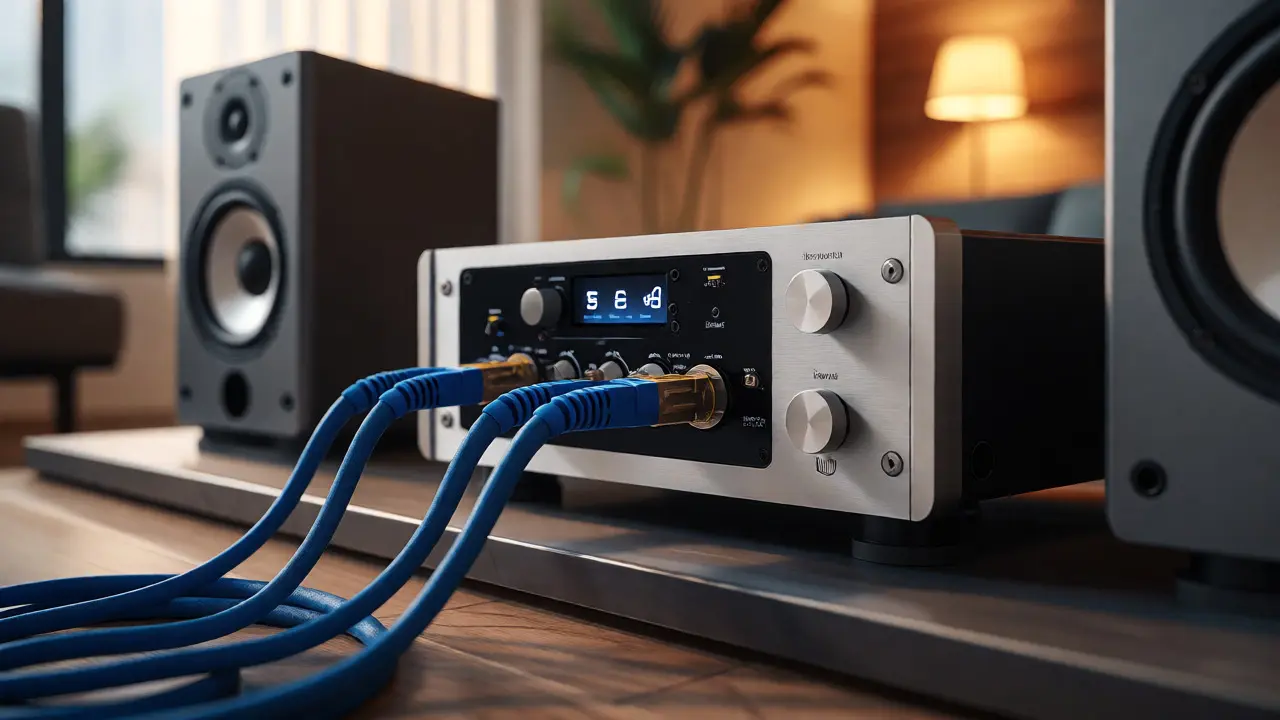
Don’t underestimate the physical layer. Cat5e is barely sufficient for modern multi-channel setups. Go with Cat6 or Cat6a cabling. It’s cheap insurance against interference and future-proofs your installation for higher channel counts.
Here’s a checklist for a robust setup:
- Use a Managed Switch: Even for Dante, a managed switch lets you create VLANs (Virtual Local Area Networks). Put all your audio devices on one VLAN, keeping them isolated from your kids’ gaming consoles.
- Power over Ethernet (PoE): Many small audio endpoints, like wall plates or small amplifiers, can be powered via PoE. This means one cable for data and power, reducing clutter.
- Clock Synchronization: Both Dante and AVB rely on PTP (Precision Time Protocol). Ensure your master clock source (usually the primary audio interface) is stable. If the clock drifts, you’ll hear clicks and pops.
- Avoid Wi-Fi Bridges: Never put a wireless bridge in the middle of an audio path. Wi-Fi introduces variable latency. Keep the core audio path wired.
One common pitfall: mixing sample rates. Dante typically runs at 48kHz or 96kHz. If your source material is 44.1kHz (standard CD quality), some devices will resample it on the fly. This adds CPU load and potential artifacts. Set your entire chain to a fixed sample rate, preferably 48kHz, to avoid conversion issues.
Real-World Scenarios: Where This Shines
Imagine you’re hosting a dinner party. You want background jazz in the dining area, but also need to mute it instantly when someone gives a toast. With Bluetooth, you’d fumble with your phone. With Dante, you assign the dining zone to a specific multicast address. A simple button on your wall panel sends a command to stop the stream. Instantly.
Or consider home recording. If you’re a podcaster or musician, Dante allows you to record multitrack audio directly to your computer over the same cable that powers your microphone preamp. No separate USB hubs, no driver conflicts. Just plug in and go.
For gamers, low latency is king. While most gaming headsets use proprietary wireless, high-end setups now offer Dante-enabled sound cards. Hearing footsteps in *Fortnite* a millisecond faster than your opponent might seem trivial, but in competitive play, it’s an edge. Plus, zero audio-video desync means your screen matches what you hear perfectly.
Future-Proofing Your Investment
Is this tech going away? Unlikely. As we move toward object-based audio formats like Dolby Atmos and spatial audio, the demand for precise timing increases. Object-based audio requires sending individual sound objects to specific locations in space. This demands massive bandwidth and strict synchronization. Standard consumer networks struggle here. Dante and AVB are already handling these loads in cinemas and studios.
Manufacturers like Audinate (Dante) and the Avnu Alliance (AVB) are actively pushing into the residential market. We’re seeing more consumer-friendly interfaces, like compact rack units and desktop DACs (Digital-to-Analog Converters) with built-in Dante. Prices are dropping as production scales.
If you’re renovating now, run extra Ethernet drops. Even if you don’t use them today, having a wired port behind your TV cabinet or bookshelf opens doors for future upgrades. Wireless tech improves, but physics never changes. Copper wire remains the most reliable way to move bits without loss.
Can I use my existing Wi-Fi router for Dante audio?
Technically yes, but it's risky. Wi-Fi introduces variable latency and packet loss due to interference. For critical listening or multi-room sync, always use a wired connection. If you must use Wi-Fi, ensure your router supports QoS and prioritize audio traffic, but expect occasional glitches during heavy network usage.
Do I need a special switch for AVB?
Yes. AVB requires switches that support IEEE 802.1Qav (Credit-Based Shaper) and 802.1AS (Timing and Synchronization). Most standard unmanaged home switches do not support these features. You'll need a managed switch with explicit AVB profile support or a dedicated AVB switch.
Is Dante better than HDMI ARC/eARC for home theater?
They serve different purposes. HDMI eARC is great for connecting a TV to a soundbar with minimal cabling. However, Dante excels at multi-zone distribution. If you want audio in five different rooms independently controlled, Dante is superior. eARC is limited to a single return channel from the TV.
How many channels can Dante handle over one cable?
On a standard Gigabit Ethernet connection, Dante can theoretically carry up to 512 channels of 48kHz/24-bit audio. In practice, for a home setup, you're unlikely to exceed 64 channels unless you're doing something very ambitious. Bandwidth is rarely the bottleneck; processing power and switch capacity are.
Will AVB work with non-AVB devices?
Not natively. AVB devices communicate using specific protocols that standard IP devices don't understand. To connect an AVB stream to a regular PC or printer, you need a gateway or bridge device that converts AVB packets to standard UDP/IP packets. This adds complexity and potential latency.