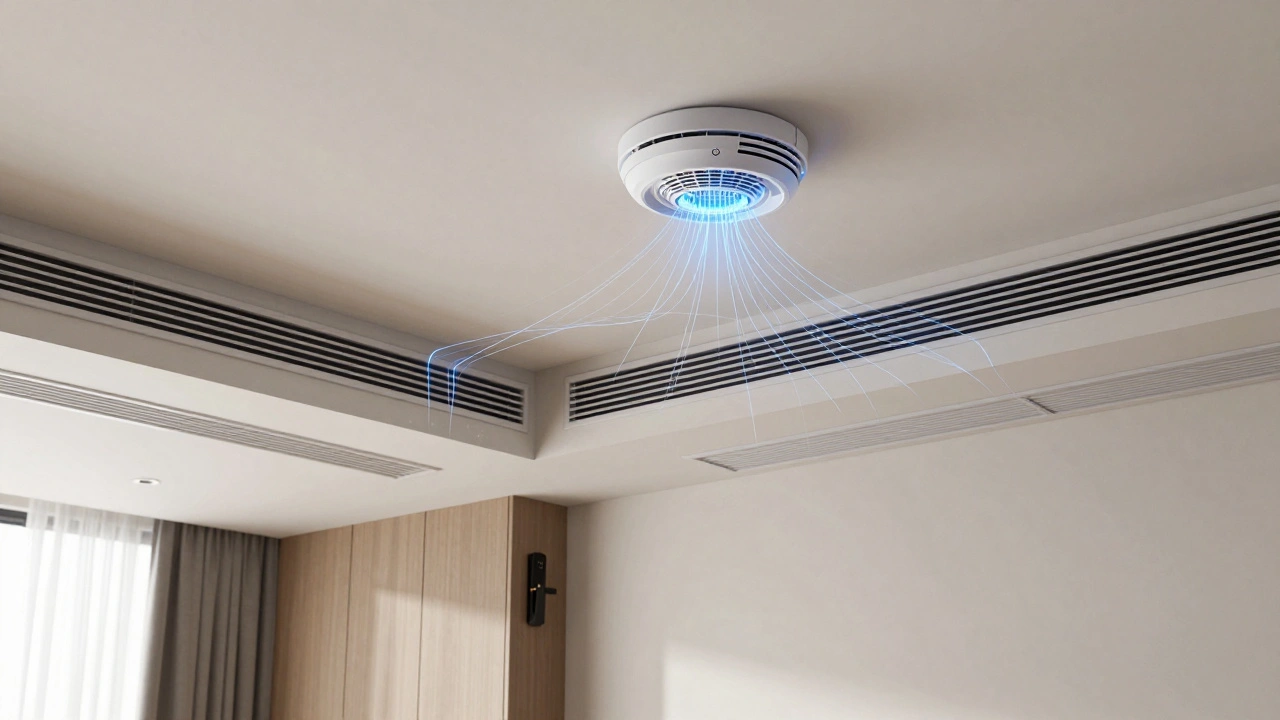
Most people think a smart home is just about voice-controlling the lights or checking a doorbell camera while at work. But there is a massive difference between a "convenience" system and a smart security compliance setup. If your smoke detector is just a plastic disc on the ceiling that screams until you hit a button, you have a basic alarm. If that alarm tells your smart HVAC to shut off the fans so smoke doesn't spread, unlocks the front door for paramedics, and flashes every light in the house red to wake up a heavy sleeper, you have a life safety integration.
Key Takeaways for Home Safety
- Compliance means following legal standards (like NFPA 72), not just buying a gadget from a big-box store.
- Integration reduces "false alarm fatigue" by verifying threats through multiple sensors.
- Life safety systems must have fail-safes; if the Wi-Fi goes down, the alarm must still sound locally.
- Interconnected sensors are the only way to ensure you hear a fire starting in the basement while you are sleeping on the third floor.
The Reality of Life Safety Standards
When we talk about "compliance," we aren't talking about a checklist for a corporate office. We are talking about the physics of how fire and gas move through a building. In the United States, the NFPA 72 is the National Fire Alarm and Signaling Code. This is the gold standard that tells professionals where sensors should be placed and how they should communicate.
A common mistake in DIY smart homes is relying on a single hub. Imagine a scenario where a power surge knocks out your internet router. If your smoke detectors rely on a cloud server to trigger a siren in another room, you've just created a dangerous blind spot. True compliance requires "local polling" or hardwired interconnections. This means the devices talk to each other directly, regardless of whether your internet is working or not.
Integrating Smoke and Carbon Monoxide Detection
Smoke and Carbon Monoxide (CO) are different beasts. Smoke is a visible byproduct of combustion, while Carbon Monoxide is a colorless, odorless gas produced by incomplete combustion of fuels. Because you can't see or smell CO, your integration needs to be proactive.
A smart integration shouldn't just beep; it should provide context. For example, if a CO sensor in the garage hits 35 ppm (parts per million), the system can send a high-priority alert to your phone and automatically trigger the HVAC System is the heating, ventilation, and air conditioning system responsible for indoor air quality to bring in fresh outdoor air. This is the jump from a reactive alarm to an active safety system.
| Feature | Standalone Alarm | Integrated Smart System |
|---|---|---|
| Alert Method | Loud siren only | Siren + Phone Alert + Visual cues |
| Interconnectivity | Isolated units | All units trigger simultaneously |
| HVAC Interaction | None | Shuts down fans to prevent smoke spread |
| Emergency Access | Manual unlock | Auto-unlocks smart locks for first responders |
| Compliance Level | Basic residential | NFPA 72 aligned / Professional grade |
The Role of the Central Hub and Communication Protocols
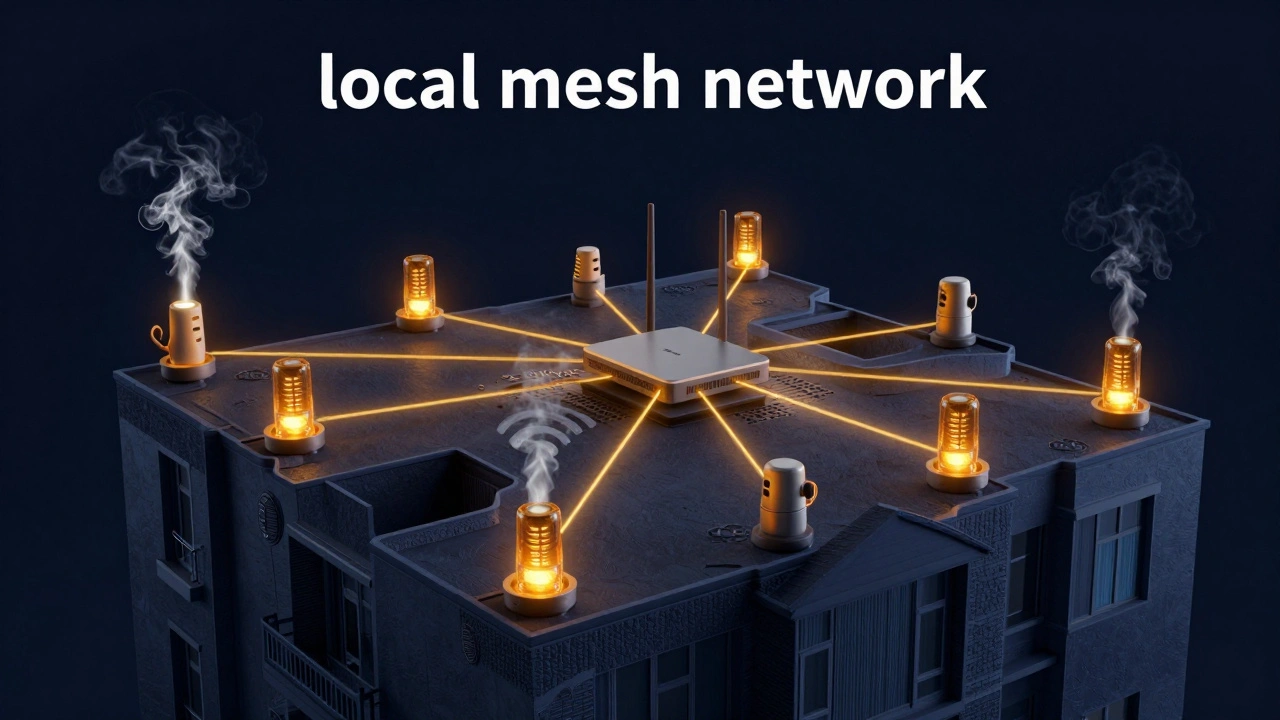
Not all wireless protocols are created equal. If you are building for safety, you need to look at how the devices communicate. Z-Wave is a wireless communications protocol used primarily for home automation that operates on a mesh network and is often preferred over Wi-Fi for security because it doesn't congest your router and has a dedicated frequency. Similarly, Zigbee is a low-power, short-range wireless mesh network standard used for creating personal area networks of low-power digital devices.
Why does this matter? Because in a fire, heat can interfere with 2.4GHz Wi-Fi signals. Mesh networks, where every powered device acts as a repeater, ensure that the "fire" signal reaches the hub even if one path is blocked by flames or collapsed ceiling tiles. If you're designing a high-compliance system, avoid "Wi-Fi only" sensors. You want a system that has a local brain (like a Home Assistant setup or a professional panel) that doesn't need to "call home" to the cloud to function.
Creating an Automated Emergency Response Plan
The real power of integration is the "If This, Then That" (IFTTT) logic applied to life safety. But instead of a simple app, this should be hard-coded into your system's logic. Let's look at a concrete example: a kitchen fire.
- Detection: The smoke sensor detects particles. It immediately triggers every other alarm in the house to wake everyone up.
- HVAC Mitigation: The system sends a command to the Smart Thermostat is a device that controls the heating and cooling of a building based on a set temperature to shut down the blower. This stops the fire from being "fed" oxygen and prevents smoke from being pumped into bedrooms.
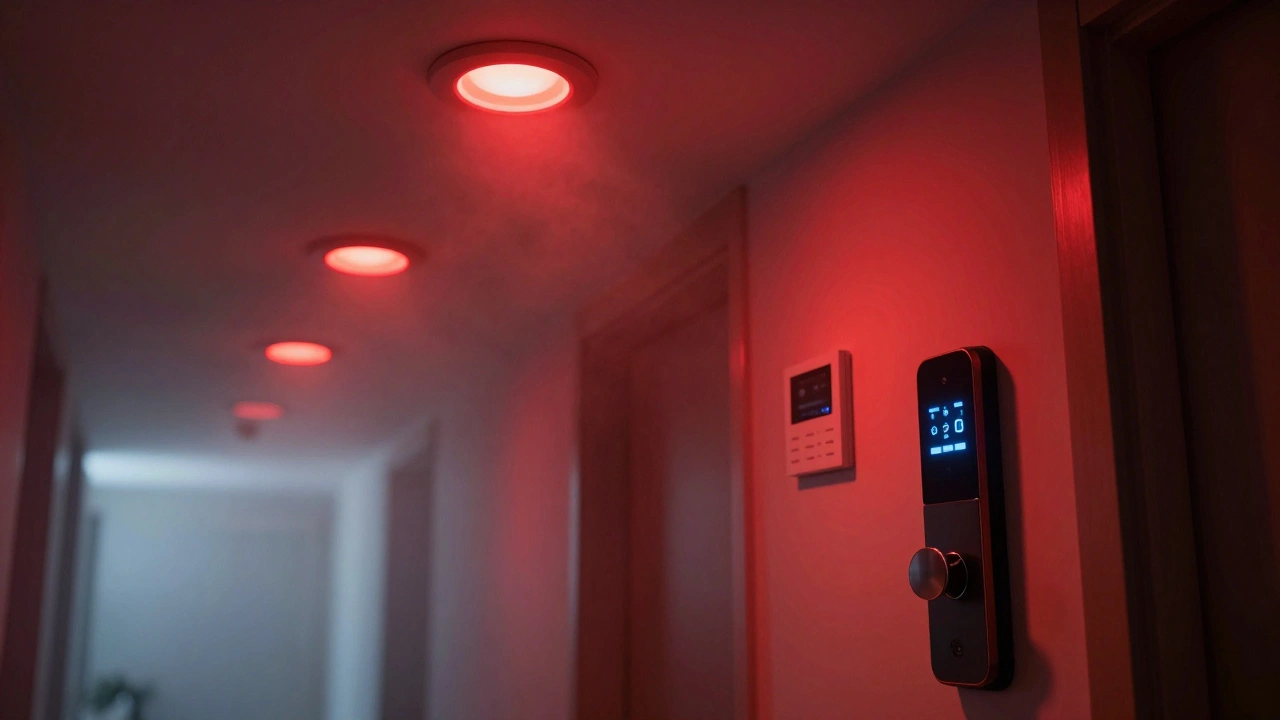
- Lighting Guidance: All smart bulbs switch to 100% brightness and turn a specific color (like bright white or red) to cut through the smoke and provide a clear path to the exit.
- Access Control: The Smart Lock is an electronic locking mechanism that can be controlled remotely via an app or hub on the front door unlocks. This ensures firefighters don't have to kick down your door, which can delay rescue by critical seconds.
Common Pitfalls and How to Avoid Them
Many homeowners fall into the "set it and forget it" trap. Smart sensors can fail, and batteries die. A compliant system must include a monitoring strategy. Do you have a heartbeat check? A heartbeat check is a signal the device sends every few minutes just to say "I'm still here." If the hub stops receiving that heartbeat, it should alert you immediately that a sensor is offline.
Another issue is "nuisance alarms." We've all had a smoke detector go off because of burnt toast. In a non-integrated home, you just wave a towel at it. In an integrated home, a nuisance alarm could accidentally unlock your doors and shut off your heat in the middle of winter. To prevent this, use a "verification delay" or multi-sensor detection. For example, the system only triggers the full emergency plan if both a smoke sensor and a heat sensor (detecting a rapid rise in temperature) are tripped.
The Future of Life Safety: AI and Edge Computing
We are moving toward Edge Computing is a distributed computing paradigm that brings computation and data storage closer to the sources of data. This means the "intelligence" happens inside the sensor, not in the cloud. Future systems will be able to distinguish between the chemical signature of a frying pan and a burning electrical wire, reducing false alarms while increasing sensitivity to real threats.
Integration is no longer just about convenience; it is about creating a protective shell around your living space. By combining the strict rules of the NFPA with the flexibility of smart home tech, you can move from a home that simply warns you of danger to a home that actively helps you survive it.
Does a smart smoke detector replace a traditional hardwired one?
Not necessarily. For full compliance, many building codes still require hardwired detectors with battery backups. The best approach is to use smart detectors that are also hardwired into your home's electrical system, providing the reliability of a traditional alarm with the notifications of a smart system.
What happens if the Wi-Fi goes out during a fire?
If you use a cloud-dependent system, you lose your remote notifications and some automations. However, a properly integrated system using protocols like Z-Wave or Zigbee will still trigger local sirens and local automations because the communication happens directly between devices and a local hub, not via the internet.
How often should I test my integrated life safety sensors?
You should test your alarms monthly. While smart systems can tell you if a battery is low, they cannot tell you if the sensor chamber is clogged with dust or spider webs. Use the physical test button to ensure the siren and the integration trigger are both functioning.
Is Carbon Monoxide detection required by law?
In many states and municipalities, CO detectors are required by law, especially in homes with attached garages or those using fuel-burning appliances (like gas furnaces or fireplaces). Check your local building codes, as requirements vary by region.
Can I integrate my smart locks with my smoke alarms?
Yes, and it is highly recommended for life safety. By creating an automation that unlocks all exterior doors when a smoke or CO alarm is triggered, you ensure that emergency responders can enter the premises quickly and that residents can exit without fumbling for keys during a panic.