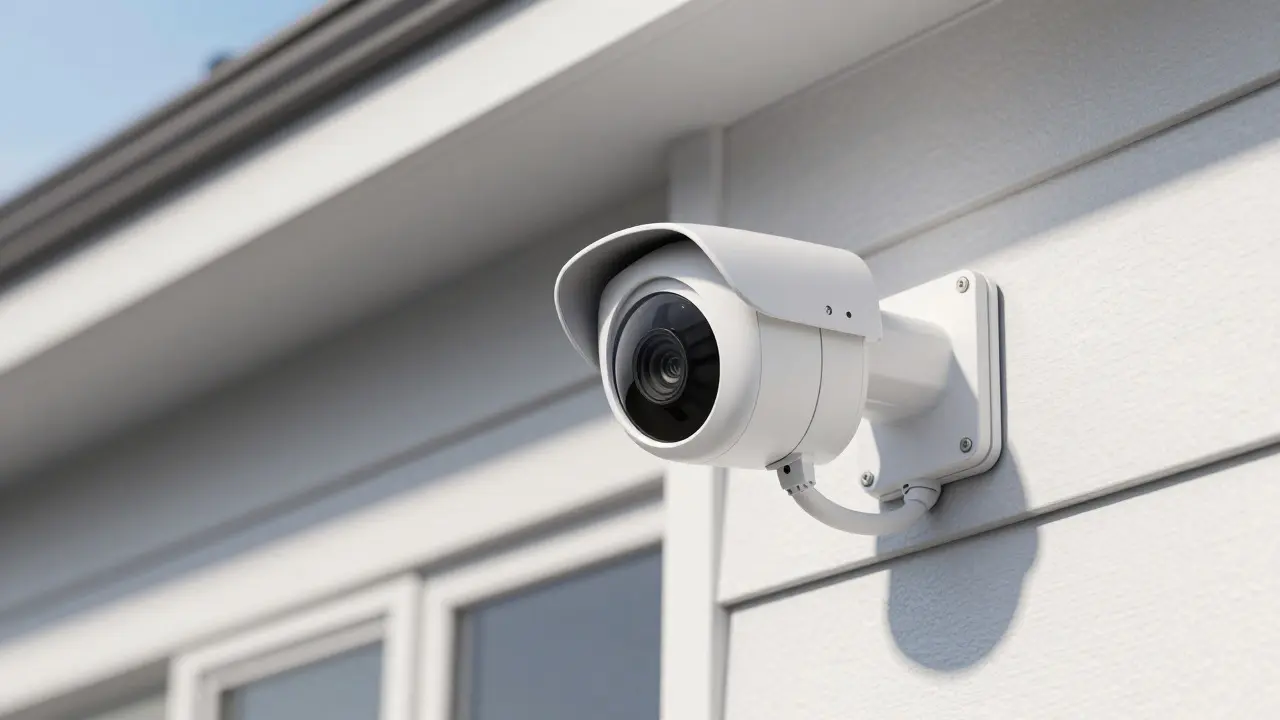
Choosing the right power source for your smart security cameras is the critical decision that determines reliability, installation flexibility, and long-term maintenance costs. You can't just pick a camera because it looks good; you have to match its energy needs to your property's layout. A wired connection offers stability, while wireless options offer freedom, but each comes with specific trade-offs regarding range, weather resistance, and signal interference. This guide breaks down the four main methods-Power over Ethernet (PoE), Wi-Fi, Battery, and Solar-so you can build a system that actually works when you need it most.
Key Takeaways
- PoE is the gold standard for reliability, delivering both data and power through a single cable up to 100 meters.
- Wi-Fi cameras are easiest to install but suffer from bandwidth congestion and signal dropouts in thick-walled homes.
- Battery-powered units offer total placement flexibility but require regular charging cycles that degrade lifespan over time.
- Solar hybrid systems provide off-grid capability but depend heavily on local sunlight hours and panel orientation.
- Hybrid setups often outperform single-method approaches by combining the stability of wired backbones with the flexibility of wireless nodes.
The Wired Backbone: Why PoE Wins on Reliability
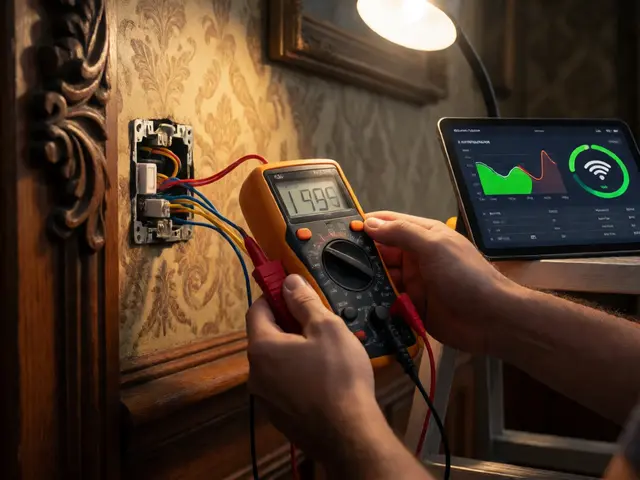
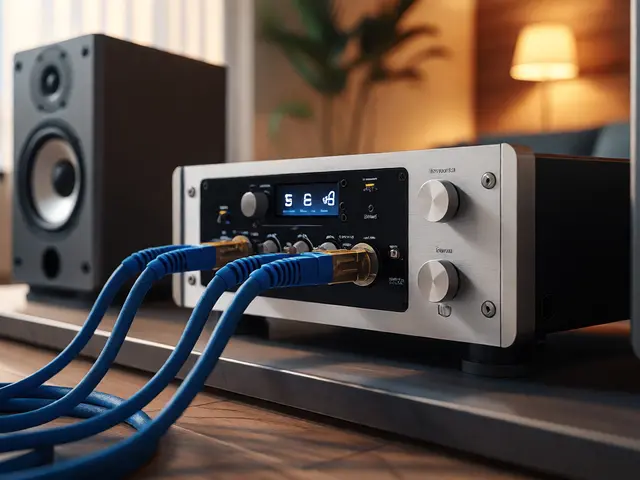
If you are building a serious security setup, Power over Ethernet (PoE) is a technology that transmits electrical power and data simultaneously over standard twisted-pair Ethernet cables. It solves two problems at once: connectivity and electricity. Instead of running separate wires for internet and power, you run one Cat5e or Cat6 cable from your Network Video Recorder (NVR) or switch to the camera. This method supports standards like IEEE 802.3af and 802.3at, which deliver 15.4 watts and 30 watts respectively, enough for most high-definition cameras including those with PTZ (Pan-Tilt-Zoom) motors.
The main advantage here is signal integrity. Unlike radio waves, copper wire doesn't get blocked by drywall, metal roofs, or neighboring networks. If you live in a dense apartment complex where every neighbor has a router, Wi-Fi signals can be chaotic. PoE ignores all that noise. The downside? Installation effort. You have to drill holes, fish wires through walls, and ensure the cable length stays under 100 meters (328 feet). If your house is large, you might need mid-span injectors or active PoE switches to boost the signal. For permanent installations where downtime is unacceptable, PoE is the only choice that guarantees consistent video feed quality without buffering or packet loss.
Wireless Freedom: Navigating Wi-Fi Limitations
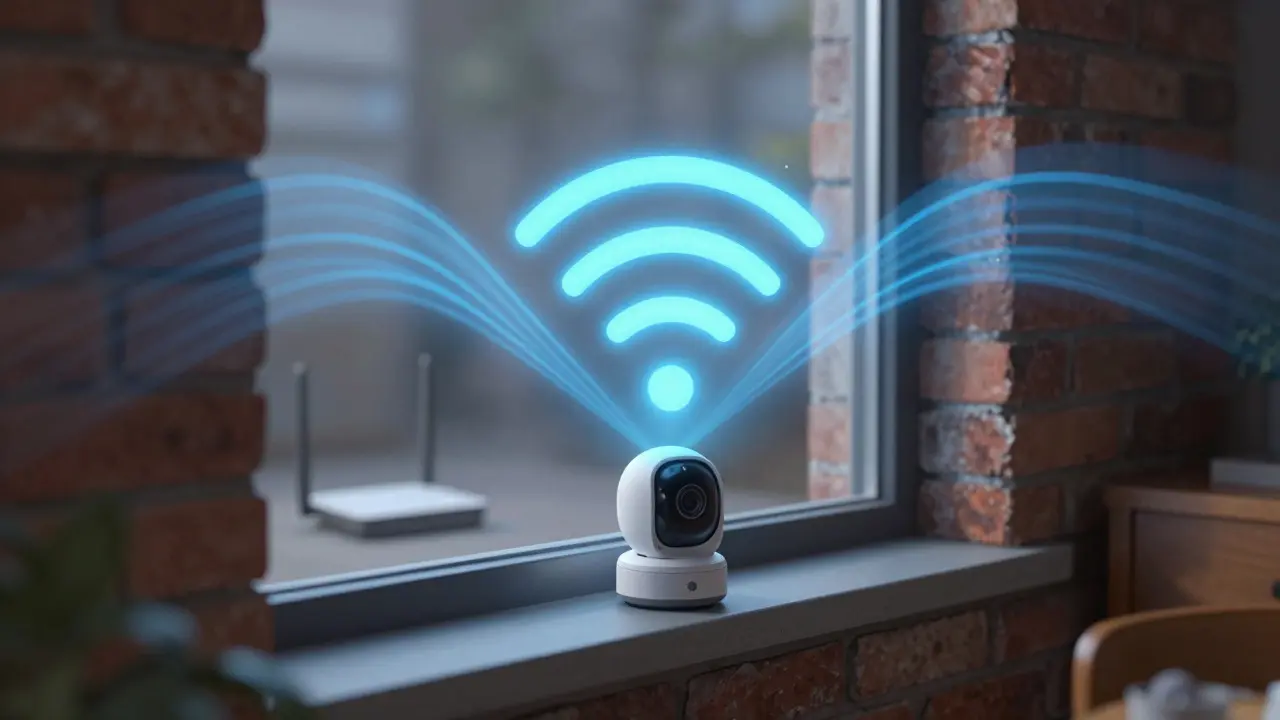
Wi-Fi smart cameras are security devices that connect to a home network via radio frequencies, typically operating on 2.4 GHz or 5 GHz bands. These are popular because they look clean-no visible wires-and install in minutes. However, "easy" does not always mean "robust." The biggest enemy of Wi-Fi cameras is distance and obstruction. Every wall, especially those with wiring or plumbing, attenuates the signal. A camera placed in a garage or backyard often struggles to maintain a stable link to a router located in the living room.
Bandwidth is another hidden cost. Streaming 1080p or 4K video consumes significant throughput. If you have multiple cameras streaming simultaneously, your home internet speed can drop, affecting other devices. To mitigate this, many modern cameras use H.265 compression, which reduces file size by up to 50% compared to older H.264 standards. Still, if you experience lag or missed motion events, check your channel congestion. Using a mesh network system can help extend coverage, but it adds cost and complexity. Wi-Fi is best suited for smaller properties or as a secondary layer for interior monitoring where walls are fewer and distances are short.
Mobile Monitoring: The Reality of Battery-Powered Units
Battery-powered security cameras are portable surveillance devices equipped with rechargeable lithium-ion cells that allow installation without any fixed power infrastructure. Think of them as the action cameras of the security world. They are perfect for temporary use, such as monitoring a construction site, a vacation rental, or a porch light area where drilling isn't an option. Most reputable brands claim 3 to 6 months of battery life on a single charge, assuming low activity levels. However, real-world performance varies drastically based on motion detection frequency and night vision usage.
Lithium-ion batteries degrade with age and temperature extremes. In summer heat, capacity drops; in winter cold, discharge rates increase. You will likely need to recharge these units quarterly, or more often if you have pets triggering constant alerts. Some newer models support magnetic charging docks, making swaps easier than unscrewing covers. If you choose this route, plan for a routine maintenance schedule. Forget to charge them, and you lose coverage exactly when you might need it. This option trades convenience for consistency, making it ideal for supplemental coverage rather than primary perimeter defense.
Off-Grid Solutions: Solar Power Dynamics
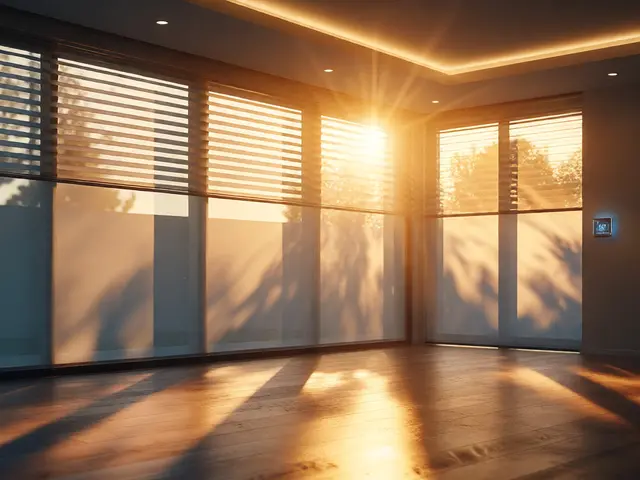
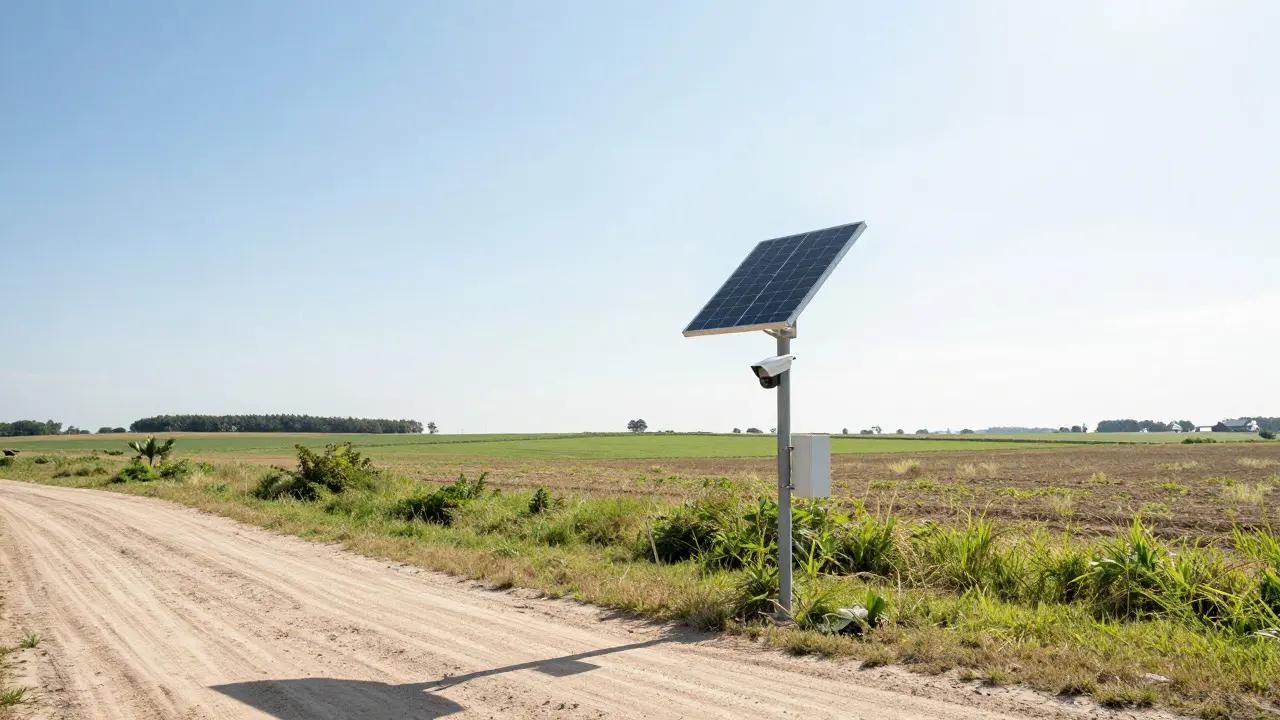
Solar-powered cameras are autonomous surveillance systems that harvest energy from photovoltaic panels to charge internal batteries, enabling operation in locations without grid access. This is the ultimate solution for remote cabins, farms, or areas where trenching for cables is impractical. A typical solar camera kit includes a small photovoltaic panel (usually 5W to 10W), a battery pack, and the camera unit. The system operates in a cycle: sunlight charges the battery during the day, and the camera draws power at night or during cloudy periods.
Success depends entirely on geography and orientation. In regions with less than 4 hours of direct sunlight per day, you may need larger panels or higher-capacity batteries. Shading from trees or buildings can cripple the system during critical times. Modern units often feature intelligent power management that lowers resolution or disables non-essential features during low-battery states to preserve core functionality. While initially more expensive than Wi-Fi options, solar systems eliminate monthly electricity bills and installation labor costs for cabling. Just ensure the mounting bracket allows for adjustable angles to track seasonal sun paths.
Comparing Power Methods: What Fits Your Home?
To make a clear decision, let's look at how these methods stack up against key criteria. The table below highlights the practical differences you'll face during installation and daily use.
| Feature | PoE (Wired) | Wi-Fi (Wireless) | Battery | Solar Hybrid |
|---|---|---|---|---|
| Installation Difficulty | High (drilling/cabling) | Low (plug-and-play) | Low (mounting only) | Medium (panel alignment) |
| Reliability | Very High | Moderate (signal dependent) | Low (charging required) | High (weather dependent) |
| Range Limit | 100 meters per cable | Varies (walls/routers) | N/A (mobile) | N/A (fixed location) |
| Maintenance Frequency | Minimal | Occasional (firmware/router) | Quarterly (recharging) | Semi-annual (cleaning/inspection) |
| Best For | Primary perimeter coverage | Interior/small yards | Temporary/mobile use | Remote/off-grid sites |
Building a Hybrid System for Maximum Coverage
Rarely is one method perfect for every corner of a property. The most effective security setups use a hybrid approach. For example, you might use PoE for the front and back doors where constant, high-quality footage is essential. Then, you could place a battery-powered camera inside a garage or storage shed where wiring would be difficult. Finally, a solar unit could monitor a distant driveway or garden path far from the house.
This layered strategy ensures that if one system fails, others continue recording. If your internet goes down, PoE cameras connected to a local NVR keep working. If a battery dies, the wired cameras still cover the main entry points. When planning this, map out your blind spots first. Identify areas with poor Wi-Fi signal and decide if they are critical enough to justify running a PoE line. For less critical zones, consider whether the hassle of recharging a battery is worth the lack of cabling. Balancing cost, aesthetics, and reliability is key to a system that lasts years, not just months.
Frequently Asked Questions
Can I mix PoE and Wi-Fi cameras in the same system?
Yes, most modern NVRs and cloud-based security apps support mixed environments. You can connect PoE cameras directly to the NVR via Ethernet and add Wi-Fi cameras through the app or a separate gateway. Just ensure your NVR has enough channels to handle the total number of devices.
How far can a PoE cable run before losing signal?
The standard limit is 100 meters (328 feet) for passive PoE. Beyond this distance, voltage drop can cause the camera to reboot or fail to start. If you need longer runs, use active PoE injectors or fiber optic converters to bridge the gap.
Do solar cameras work in winter or cloudy weather?
They do, but efficiency drops. Cloudy days reduce charging speed, so the battery must last longer between full charges. In deep winter with short daylight hours, you may need to upgrade to a larger battery pack or add a second panel to ensure sufficient energy storage.
Which power method is cheapest in the long run?
PoE is generally the lowest cost over time because it requires no recurring battery replacements or electricity bills beyond the initial hardware. Solar is also low-cost after installation but has higher upfront expenses. Wi-Fi and battery options have lower upfront costs but incur ongoing maintenance or subscription fees.
Is it safe to leave battery cameras outside year-round?
Only if the camera is rated IP65 or higher for dust and water resistance. Extreme cold can reduce battery capacity significantly. In very cold climates, consider using a heated enclosure or switching to a PoE or solar model with better thermal management for outdoor durability.