Imagine a client calls you at 7 AM because their hotel reservation fell through. They don't just want a new booking; they want to know you care enough to fix it fast and remember the mistake so it never happens again. That is the essence of a customer feedback loop. In the concierge business, where trust is your currency, collecting data is only half the battle. The real value lies in what you do with that data immediately after.
Most concierge teams treat surveys as a checkbox exercise. You send a link, get a few stars, and move on. But when you implement true closed-loop actions, every interaction becomes an opportunity to deepen loyalty. This guide breaks down how to build a system that listens, acts, and proves to your clients that their voice matters.
Why Generic Surveys Fail Concierge Clients
Concierge clients are different from standard e-commerce shoppers. They expect personalized attention, not mass-produced interactions. If you send a generic five-question survey about "overall satisfaction," you miss the nuance that drives high-ticket relationships. A client might rate your response time as excellent but feel ignored because you didn't follow up on a specific request for restaurant reservations.
The problem isn't the lack of data; it's the lack of context. To fix this, your feedback mechanism needs to be granular. Instead of asking "How was our service?", ask specific questions tied to the recent transaction. Did we secure the table within the promised timeframe? Was the communication clear during the handoff to the driver?
- Timing is critical: Send feedback requests within 24 hours of the task completion. After that, the memory fades, and the emotional weight drops.
- Keep it short: Limit surveys to three or four questions maximum. High-net-worth clients value their time more than yours.
- Focus on behavior, not feelings: Ask about specific outcomes (e.g., "Did the car arrive on time?") rather than vague sentiments (e.g., "Were you happy?").
Building the Closed-Loop Mechanism
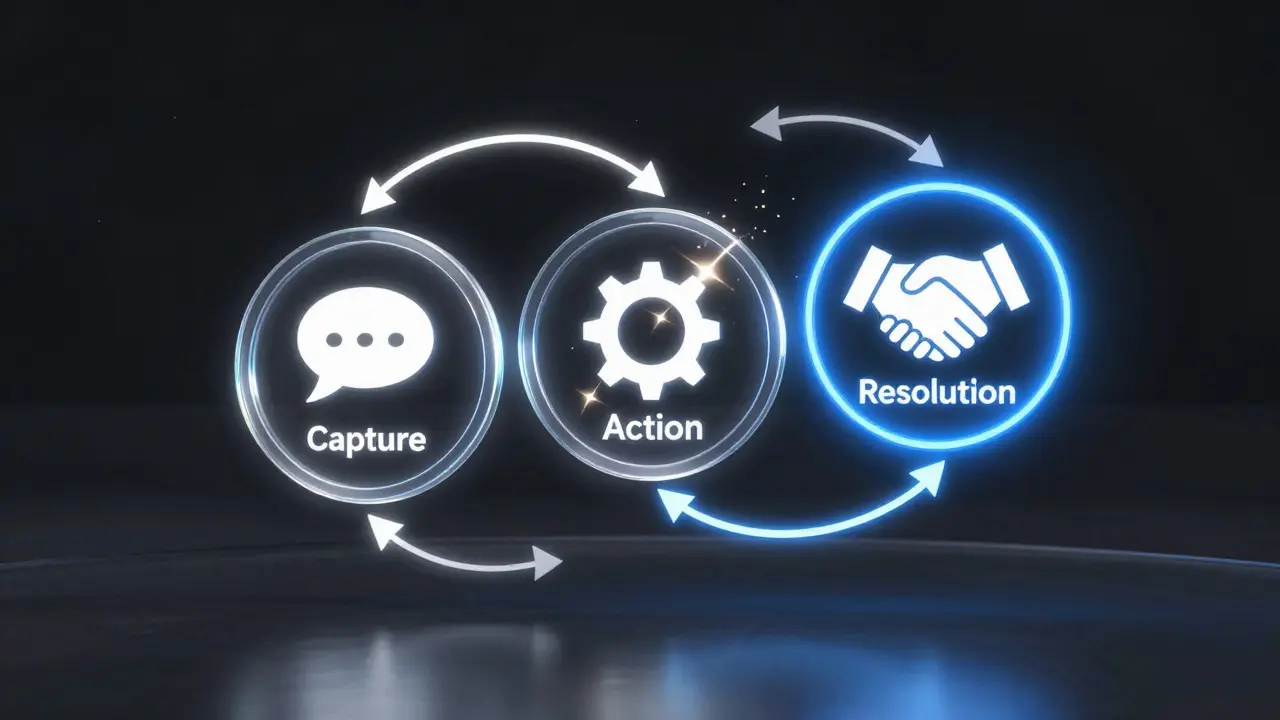
A closed-loop system ensures that every piece of feedback receives a direct human response. It transforms a one-way street into a two-way conversation. When a client leaves a comment, someone from your team must acknowledge it, explain the next step, and confirm resolution. This process is often called the "Acknowledge-Act-Acknowledge" cycle.
Here is how the workflow looks in practice:
- Capture: The client submits feedback via email, SMS, or a digital portal.
- Triage: Your operations lead reviews the input within two hours. Is it praise, a minor complaint, or a critical failure?
- Action: For praise, send a thank-you note. For issues, assign a specific owner to resolve it.
- Resolution: The owner fixes the issue and documents the solution in your CRM.
- Follow-up: Reach out to the client to confirm the fix. "We noticed the delay with your dry cleaning. We’ve added a buffer to future pickups. Does that work for you?"
This final step is where most businesses fail. They fix the problem but stay silent. By closing the loop, you demonstrate accountability. You show the client that their feedback didn't vanish into a black hole but triggered a tangible change in how you serve them.
Turning Data into Operational Improvements
Individual feedback items help you save a single client relationship. Aggregated data helps you improve your entire operation. Once you have a few months of closed-loop records, patterns will emerge. Maybe 30% of complaints involve late arrivals for airport transfers. Perhaps 20% of neutral ratings stem from unclear pricing quotes before service initiation.
Use these insights to adjust your Standard Operating Procedures (SOPs). If airport transfers are consistently late, analyze whether it’s a routing issue, a driver scheduling gap, or a traffic prediction failure. Update your dispatch software or add a 15-minute buffer to all pre-dawn pickups. Then, communicate this change back to your regular clients. Transparency builds trust.
| Feature | Open Loop (Standard) | Closed Loop (Advanced) |
|---|---|---|
| Client Perception | "They take my money." | "They listen and adapt." |
| Response Time | None or automated ticket | Human response within 24 hours |
| Data Utility | Aggregate scores only | Specific operational triggers |
| Retention Impact | Low correlation | High correlation with repeat bookings |
| Staff Engagement | Passive data entry | Active problem solving |
Tools and Technology Stack
You don’t need enterprise-grade software to start, but you do need integration. Your Customer Relationship Management (CRM) system should talk directly to your feedback tool. If you use spreadsheets, ensure there is a manual bridge between the survey results and your task management board.
Key components include:
- Survey Platform: Tools like Typeform or SurveyMonkey allow for conditional logic. If a client rates a service low, ask "Why?" immediately. If high, ask "What did we do right?"
- Communication Hub: Use a unified inbox for SMS and email. Clients in the concierge space often prefer text messages for quick updates. Ensure your feedback channel matches their preferred communication style.
- Task Management: Integrate feedback tickets into tools like Asana or Monday.com. Each negative comment should generate a task with a deadline and an assigned owner.
Automation helps, but don’t overdo it. Automated emails can feel cold. Use automation for reminders and data logging, but keep the actual response to the client human-written whenever possible.
Handling Negative Feedback Gracefully
Negative feedback is gold dust if handled correctly. A client who complains is still engaged. A client who goes silent is already gone. When a major error occurs-like a missed flight or a double-booked event-the first 30 minutes determine the outcome.
Avoid defensive language. Don’t say, "It wasn't our fault, the vendor messed up." Say, "We let you down. Here is how we are fixing it right now." Offer a remedy that exceeds expectations. If you missed a dinner reservation, don’t just book another table. Book the best available table, send a bottle of wine, and have a manager call to apologize personally.
Document the root cause. Was it a training gap? A software glitch? A communication breakdown? Fixing the root cause prevents the same issue from happening to the next client. This is the core of continuous improvement in service operations.

Measuring Success Beyond Star Ratings
Star ratings are vanity metrics. They tell you if you’re average, but not if you’re exceptional. To measure the effectiveness of your feedback loops, track these operational KPIs:
- Time to Resolution (TTR): How long does it take to close a feedback ticket? Aim for under 48 hours for non-critical issues.
- Repeat Booking Rate: Track if clients who gave feedback (positive or negative) book again within 90 days. Usually, clients who had an issue resolved well become *more* loyal than those who had no issues at all.
- Net Promoter Score (NPS) Drivers: Analyze which specific actions correlate with NPS scores above 9. Do clients love the proactive check-ins? The speed of payment processing?
If your TTR is high, your staff is overwhelmed. If your repeat booking rate is low despite good ratings, your service quality might be inconsistent. These metrics give you a clearer picture than any single survey score.
Common Pitfalls to Avoid
Even experienced teams stumble. Here are the most common mistakes:
- The Black Hole Effect: Collecting feedback but never acting on it. Clients notice. If they complain twice about the same thing, they assume you don’t care.
- Blaming the Vendor: Your client doesn’t care if the florist failed. They hired *you*. Take ownership of the entire experience.
- Over-Surveying: Sending a survey after every single interaction fatigues the client. Focus on key milestones: onboarding, major projects, and post-resolution of issues.
- Lack of Ownership: If no one is specifically responsible for closing the loop, it won’t happen. Assign a dedicated person or rotate the duty clearly.
Implementing Your First Closed-Loop Cycle
Ready to start? Don’t overhaul your entire system overnight. Pick one segment of your business-perhaps airport transfers-and pilot the closed-loop process for one month.
- Send a targeted survey to all transfer clients after their trip.
- Assign one team member to review responses daily.
- Require a personal follow-up for any rating below 5 stars.
- Log every action taken in your CRM.
- Review the data at the end of the month to identify one process improvement.
Once you see the positive impact on client sentiment and operational clarity, expand the model to other service lines. The goal isn’t just to collect data; it’s to create a culture where feedback is seen as a gift, not a burden. When your clients feel heard, they stop shopping around. They stay, they refer, and they pay premium prices for the peace of mind that comes from knowing someone has their back.
How often should concierge services send feedback surveys?
Send surveys after key service milestones rather than every single transaction. For high-frequency services like rides, consider quarterly summaries. For unique experiences like event planning, send a detailed survey immediately after the event concludes. The frequency should balance data collection with client fatigue.
What is the ideal response time for negative feedback?
For critical errors, respond within 2 hours. For general complaints, aim for under 24 hours. Speed signals urgency and respect. However, ensure the response includes a concrete plan of action, not just an apology.
Do I need expensive software to manage feedback loops?
No. A simple spreadsheet linked to your calendar and email can work for small teams. The key is consistency in tracking and assigning tasks. Upgrade to integrated CRM software only when volume makes manual tracking inefficient.
How do I handle clients who give vague feedback?
Call them. Vague feedback usually means the client is unsure of what went wrong or feels too polite to specify. A brief phone conversation can uncover the real issue. Ask open-ended questions like, "What could we have done differently to make this smoother?"
Is it worth responding to positive feedback?
Yes. Acknowledging praise reinforces desired behaviors in your team and makes the client feel valued. It costs little effort but significantly boosts emotional connection. Use positive comments to highlight specific staff members in internal meetings.