Standing in a store aisle staring at rows of identical-looking window coverings can feel like trying to pick a color by looking at a color swatch in the dark. You know you want smart shades, but the real decision isn't about the app interface or the voice assistant compatibility. It's about what happens when the sun hits your living room at 3 PM on a Tuesday. The fabric and opacity level determine your comfort, energy bills, and sleep quality more than any motor does.
This guide cuts through the marketing fluff to explain exactly how different materials interact with light, heat, and privacy. We’ll look at the specific trade-offs between sheer elegance and total darkness, and help you match the right texture to your specific room needs without overspending on features you won’t use.
Quick Summary / Key Takeaways
- Opacity is not binary: There are distinct tiers (sheer, semi-sheer, opaque) that serve different functions; mixing them creates better lighting control than using one type everywhere.
- Fabric weight impacts motor life: Heavier blackout fabrics require more torque from the smart motor, potentially shortening battery life if using wireless units.
- Thermal performance varies by weave: Not all "blackout" labels mean the same thing; double-weave structures block up to 99% of light and reduce heat transfer significantly compared to single-layer options.
- Maintenance dictates choice: If you have pets or kids, textured or coated fabrics resist dust and stains far better than delicate linens or silks.
Understanding Opacity Tiers: Sheer to Blackout
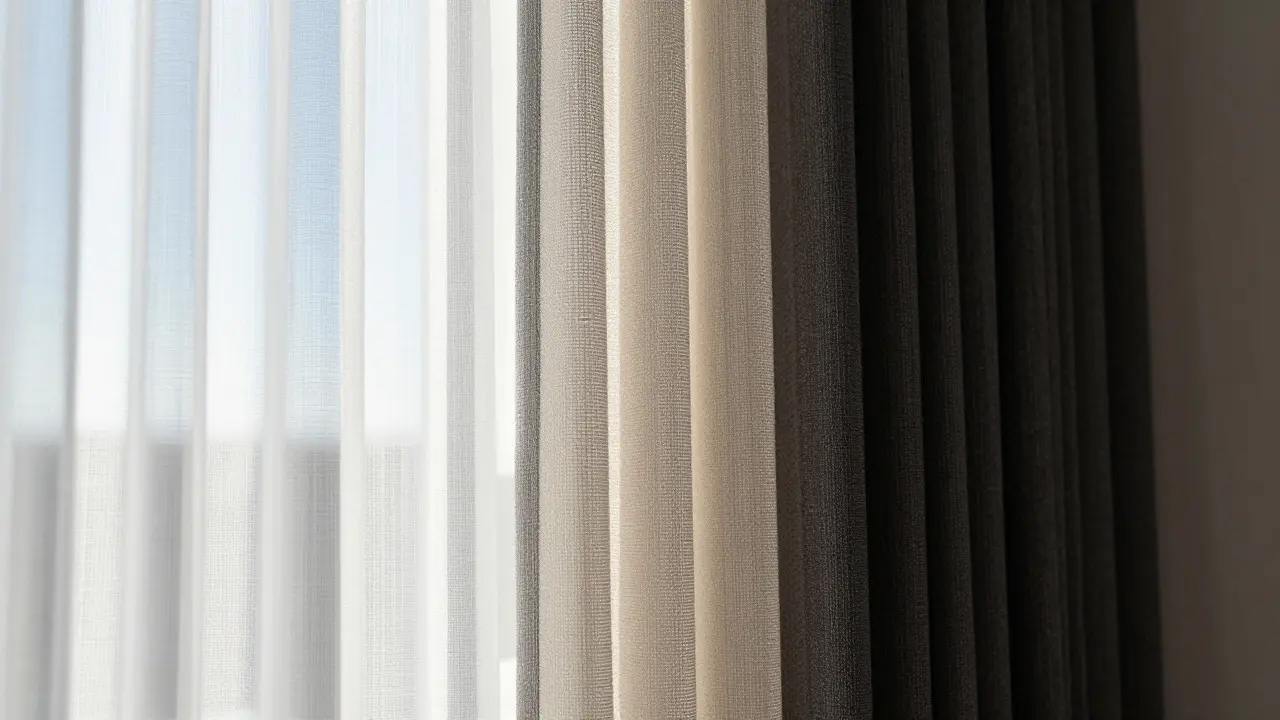
When manufacturers talk about opacity, they are referring to the percentage of visible light that passes through the material. This isn't just an aesthetic choice; it directly affects how much daylight you retain during the day and how much privacy you lose at night.
Sheer Shades are lightweight, translucent fabrics that allow significant natural light to filter through while diffusing harsh direct sunlight. These are ideal for rooms where you want brightness but need to soften glare on screens or furniture. They typically block only 10-20% of light. However, they offer almost no privacy at night when interior lights are on, as the glass effect reverses.
Semi-Sheer (Light Filtering) shades sit in the middle ground. They block roughly 40-70% of light. This is the sweet spot for most bedrooms and living areas. You get enough ambient light to see during the day, but enough coverage to hide clutter or activities inside the house. The fabric usually has a tighter weave than sheers, offering better durability and a slightly more substantial feel.
Blackout Shades are designed to eliminate external light entirely. High-quality versions block 95-99% of visible light. This is critical for home theaters, nurseries, and bedrooms in north-facing homes or urban centers with bright streetlights. The downside? They can make a room feel cave-like if used in spaces where you want to maintain a connection to the outdoors.
| Level | Light Transmission | Privacy (Day/Night) | Best Use Case | Heat Reduction |
|---|---|---|---|---|
| Sheer | 80-90% | Low / Very Low | Kitchens, Sunrooms | Minimal |
| Semi-Sheer | 30-60% | Medium / Medium | Living Rooms, Offices | Moderate |
| Blackout | <5% | High / High | Bedrooms, Media Rooms | High |
Fabric Materials and Their Real-World Performance
The material of the fabric determines how it feels, how it cleans, and how it ages. In the smart shade market, you will mostly encounter polyester blends, cotton-linen mixes, and specialized synthetic coatings.
Polyester is the workhorse of the industry. It resists fading, shrinks minimally, and holds its shape well. For smart shades, which may be operated hundreds of times a year, this durability is non-negotiable. Cotton-linen blends offer a warmer, more organic look but tend to wrinkle more easily and may fade faster in high-sun exposures unless treated with UV inhibitors.
Consider the texture. Smooth fabrics show every imperfection in the wall behind them. If your walls are uneven or painted in a way that creates shadows, a smooth, tight-weave fabric will highlight those flaws. Textured weaves, like basketweave or herringbone patterns, break up the visual line and hide minor wall irregularities. They also trap less dust than flat surfaces, making them easier to wipe down with a damp cloth.
Motor Compatibility and Weight Considerations
Here is where many buyers make a mistake: assuming any fabric works with any motor. Smart shade motors have specific torque ratings. A lightweight sheer fabric weighs significantly less than a heavy, double-layered blackout panel. If you choose a very heavy fabric for a budget-friendly motor, you might experience slower response times or increased battery drain.
For battery-operated systems, every gram counts. A heavier shade requires more energy to lift. If you plan to run your shades on a schedule multiple times a day, opting for a mid-weight semi-sheer fabric can extend the interval between battery replacements or recharges. Hardwired systems handle weight differences more gracefully, so if you are installing in a new build or renovating, hardwiring gives you more freedom to choose heavier, higher-performance blackout fabrics without worrying about power consumption.
Room-by-Room Selection Strategy
Your home is not a monolith. Each room has different light profiles and functional needs. Using the same fabric throughout is rarely the optimal choice.
In the kitchen, glare on countertops and appliances is a daily annoyance. Sheer or light-filtering fabrics here keep the space bright while reducing harsh reflections. Privacy is less of a concern during the day, and at night, you likely have curtains or other layers for additional seclusion.
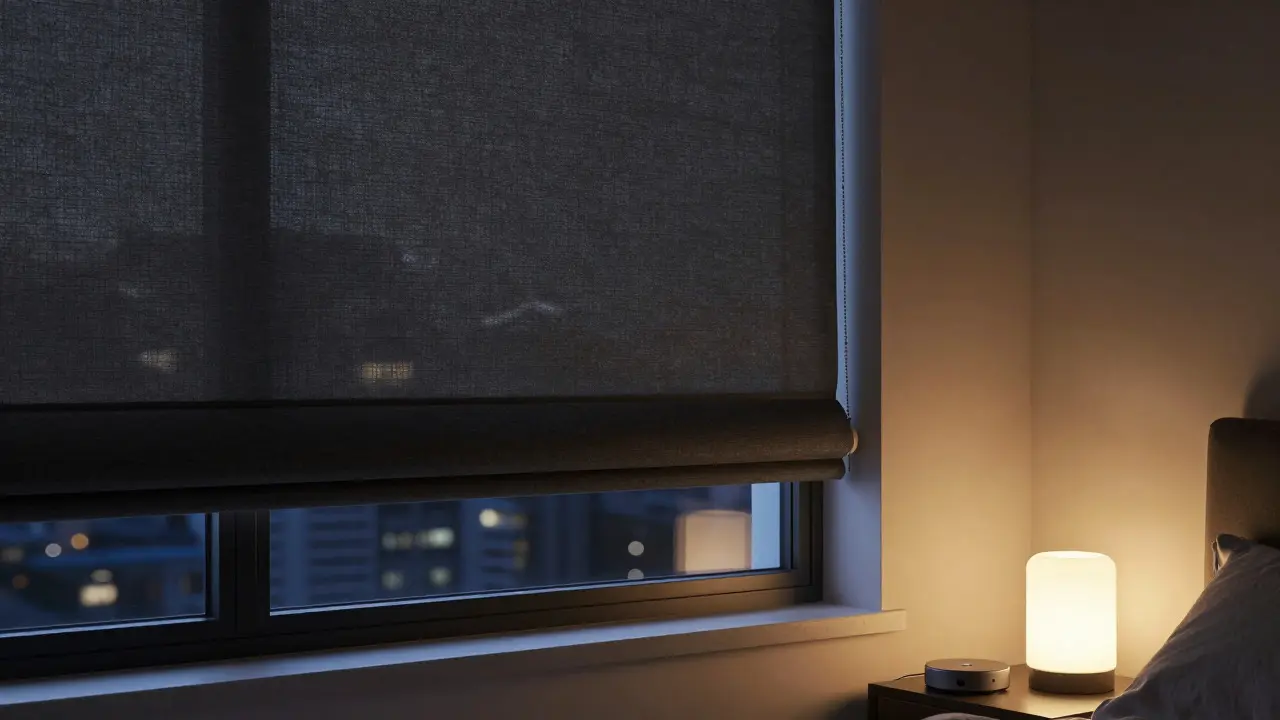
Bedrooms are different. Sleep quality is paramount. If you wake up at 5 AM because the sunrise is too bright, a standard light-filtering shade won't cut it. You need true blackout capability. Look for fabrics with a backing layer that seals against the window frame. Many smart shades have side channels or tension mechanisms that create a seal, preventing light leaks from the edges.
Home offices and media rooms benefit from dual-control scenarios. Some smart systems allow you to pair two different fabrics or use top-down/bottom-up operations. This lets you let in light from the top for ventilation and visibility while keeping the bottom closed for privacy and screen glare reduction.
Energy Efficiency and Thermal Properties
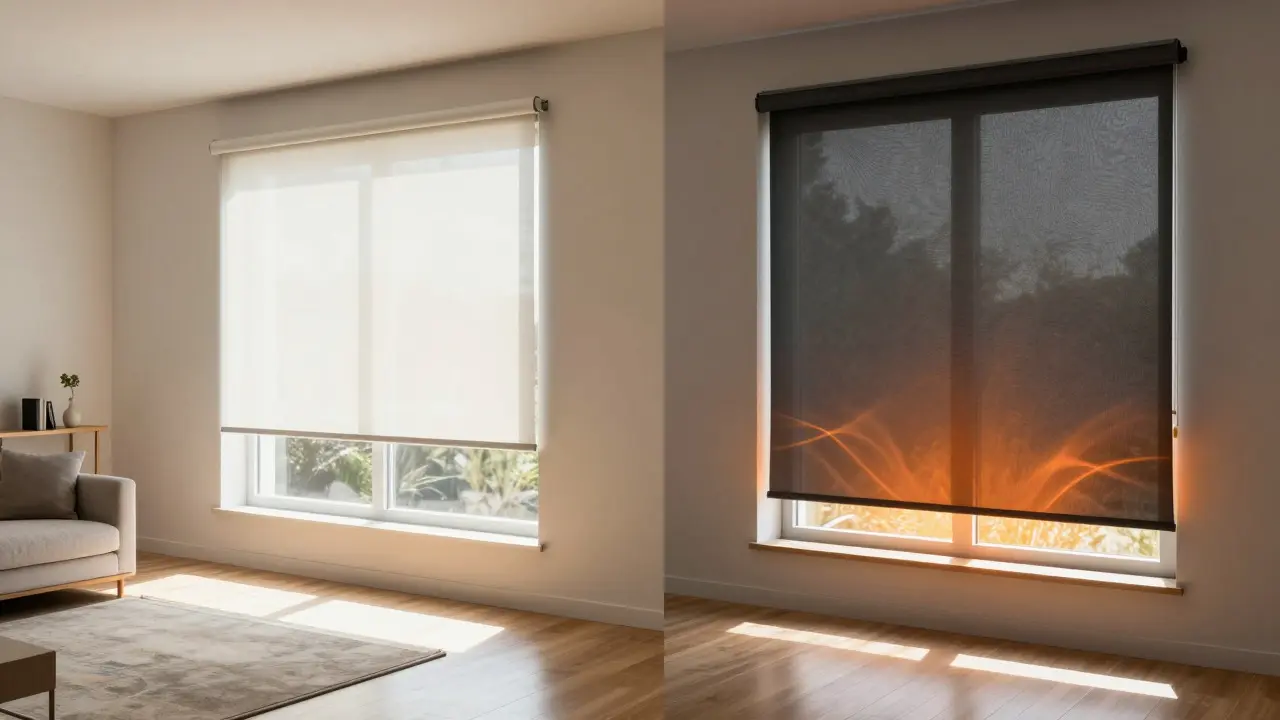
Opacity isn't just about sight; it's about temperature. Darker, denser fabrics absorb more solar radiation. In summer, this can actually warm up the air near the window if the shade is open. However, when closed, a good blackout shade acts as an insulator, reducing heat gain in summer and heat loss in winter.
If you live in a hot climate, consider lighter-colored fabrics on the exterior face of the shade to reflect sunlight before it penetrates the material. In colder climates, darker fabrics can help capture passive solar heat during the day. Always check the manufacturer’s R-value or thermal transmission data if available, as these metrics give you a concrete number on how well the fabric insulates.
Cleaning and Maintenance Realities
Smart shades are often installed high up, making cleaning difficult. Choose fabrics based on how easy they are to maintain. Microfiber or synthetic blends can usually be wiped clean with a mild detergent solution. Natural fibers like cotton or linen may require vacuuming with a brush attachment to avoid pulling threads.
Avoid heavily textured fabrics in kitchens if you cook frequently. Grease particles can embed deep into the weave, creating permanent stains that are nearly impossible to remove. Smooth, coated synthetics repel grease and moisture, making them the practical choice for high-humidity or high-traffic areas.
FAQ
Can I mix different opacity levels in the same room?
Yes, and it is often recommended. For example, you might use sheer shades on windows facing a quiet garden for daytime light, and blackout shades on windows facing a busy street for nighttime privacy. Most smart hub systems allow you to group shades differently, so you can program them independently even if they are in the same room.
Do smart blackout shades really block all light?
Most high-quality smart blackout shades block 95-99% of light. The remaining 1-5% usually comes from light leaking around the edges of the shade or through gaps in the window frame. To maximize darkness, ensure the shade fits tightly within the window recess and consider adding weatherstripping or side seals if necessary.
Which fabric is best for pet hair?
Smooth, tightly woven synthetic fabrics are best for pet hair. They do not have loose threads for hair to snag onto, and a simple lint roller or damp cloth removes hair easily. Avoid nubby or loosely woven textures where hair can get trapped deep in the material.
Will my smart shades fade over time?
All fabrics fade to some degree, but modern smart shade fabrics are usually treated with UV inhibitors. Polyester-based fabrics fade the least. To minimize fading, close the shades during peak sun hours or choose colors that are naturally resistant to fading, such as grays, blues, and earth tones.
Is it worth paying extra for custom-fitted smart shades?
Custom fitting ensures a seamless look and better light sealing, which is crucial for blackout performance. Off-the-shelf shades may leave gaps at the sides or bottom. If you prioritize aesthetics and maximum light control, custom is worth the investment. For budget-conscious buyers or temporary rentals, off-the-shelf options are sufficient.