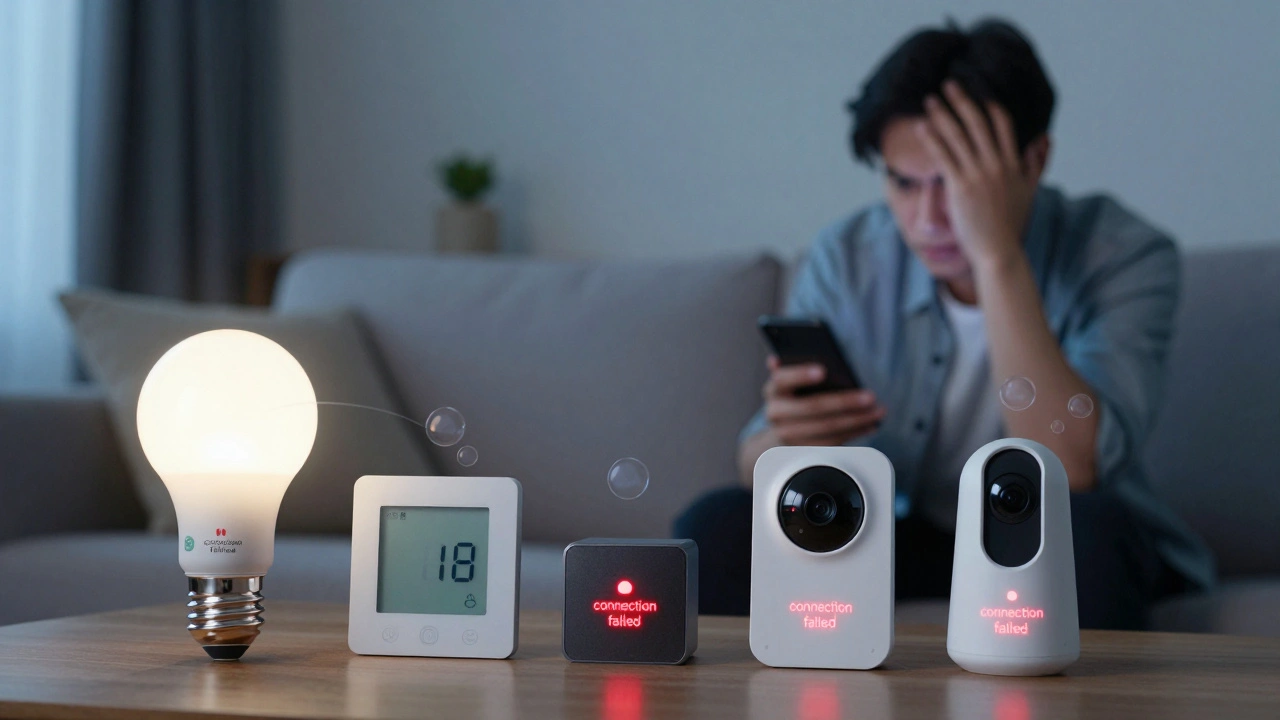
It is 2026, yet you still have four different apps to control your lights, thermostat, locks, and camera. It shouldn’t be this way. The promise of the smart home was simplicity-controlling everything from one place. Instead, most of us are stuck managing a fragmented ecosystem where devices refuse to talk to each other unless they share the same brand or use the exact same communication language.
This friction comes down to interoperability. In simple terms, it is the ability of different systems and devices to exchange and make use of information. Without it, your smart home is just a collection of isolated gadgets. With it, your home becomes a cohesive unit that reacts to your needs seamlessly. Today, we have four major players defining how your devices communicate: Matter, the new open-source standard designed to unify smart home ecosystems, Zigbee, a low-power mesh networking protocol for IoT devices, Z-Wave, a proprietary wireless protocol for home automation, and Wi-Fi, the ubiquitous wireless networking technology for internet connectivity.
The Fragmentation Problem: Why Standards Matter
Before we dive into the technical specs, let’s look at why this matters to you. Imagine buying a smart bulb because it works with your preferred voice assistant. Six months later, you buy a smart lock from a different brand. Suddenly, you can’t create a routine where the lights turn on when the lock unlocks because the two devices speak different languages. This is the "walled garden" problem that plagued the industry for over a decade.
Each manufacturer wanted you locked into their ecosystem. Apple pushed HomeKit, Google pushed Google Home, and Amazon pushed Alexa. While these platforms improved, they remained silos. If you switched your primary hub from an Echo to a Nest Hub, you often had to replace half your devices. This lack of interoperability drove up costs, increased e-waste, and frustrated users who just wanted their lights to turn on.
The shift in 2023-2024 toward unified standards marked a turning point. The industry realized that fragmentation was killing adoption. Now, the focus is on protocols that work across brands. Understanding which protocol powers your device helps you build a reliable system that won’t leave you stranded if one platform shuts down its servers.
Matter: The Unifier of Smart Homes
Matter is not just another protocol; it is a royalty-free application-layer networking standard built on top of existing infrastructure. Launched in late 2022 and matured significantly by 2025-2026, Matter aims to be the universal translator for smart homes. It supports Wi-Fi, Thread, and Ethernet as transport layers.
What makes Matter special is its certification process. When you see the Matter logo on a device, you know it will work with any Matter-certified controller, whether that’s an iPhone, an Android phone, an Amazon Echo, or a Samsung SmartThings hub. You do not need to worry about compatibility lists anymore. If it has the logo, it works.
Matter also prioritizes local control. Unlike older cloud-dependent models, Matter allows devices to communicate directly on your local network. This means if your internet goes down, your lights still respond to switches, and your security cameras still record locally. This reliability is crucial for safety-critical devices like smoke detectors and door locks.
- Key Benefit: Cross-platform compatibility (Apple, Google, Amazon, Samsung).
- Transport Layers: Wi-Fi, Thread, Ethernet.
- Security: Built-in encryption and secure commissioning via QR codes or NFC.
- Limitation: Requires a compatible controller/hub; does not replace legacy Zigbee/Z-Wave hubs entirely yet.
By 2026, most new mid-to-high-end devices come with Matter support. However, Matter does not run alone. It often relies on Thread, a low-power, IPv6-based mesh networking protocol for battery-operated devices. Thread provides the backbone for Matter’s mesh capabilities, ensuring low latency and high reliability without draining batteries.
Zigbee: The Reliable Mesh Workhorse
Zigbee has been around since the early 2000s. It operates on the 2.4 GHz frequency band, the same as Wi-Fi and Bluetooth. This ubiquity means every Wi-Fi router and smartphone already has a radio capable of handling 2.4 GHz signals, but Zigbee uses them differently.
Zigbee creates a mesh network. Each device acts as a repeater, passing data to the next device until it reaches the central hub. This is incredibly efficient for large homes. If you have a sensor in the garage and a hub in the living room, the signal bounces through light bulbs and plugs along the way. The more devices you add, the stronger the network becomes.
Despite the rise of Matter, Zigbee remains relevant. Many existing installations rely on it. Moreover, Matter over Thread is the successor in spirit, but Zigbee offers a proven track record for low-power consumption. Battery-powered sensors can last years on a single coin cell because Zigbee sends small packets of data infrequently.
However, Zigbee requires a hub. You cannot connect a Zigbee device directly to your Wi-Fi router. This adds a layer of complexity. You must ensure your hub (like a Philips Hue Bridge or Samsung SmartThings) is online and functioning. Additionally, because it shares the 2.4 GHz band with Wi-Fi, interference can occur if you have many Wi-Fi clients or microwave ovens running nearby.
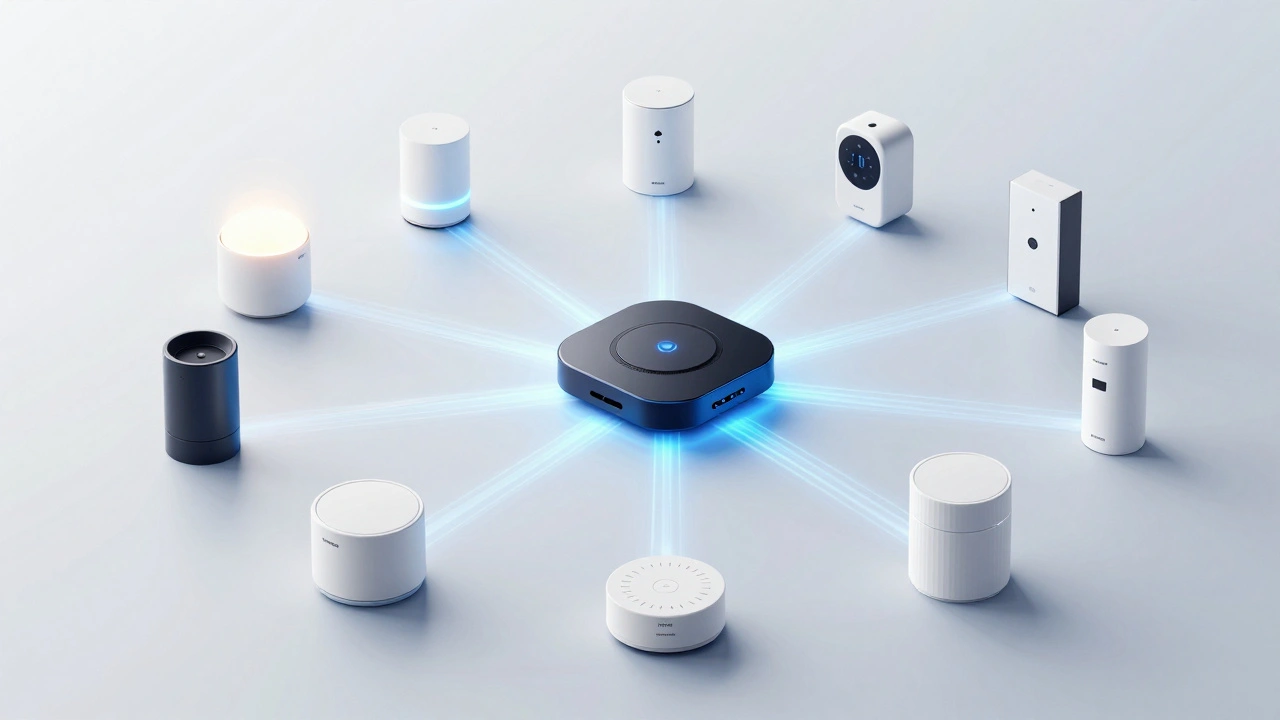
Z-Wave: The Interference-Free Alternative
If Zigbee is the popular choice, Z-Wave is the niche specialist. It operates on sub-GHz frequencies (900 MHz in the US, 868 MHz in Europe). This is a crowded space for Wi-Fi, but it is relatively empty for smart home protocols. As a result, Z-Wave suffers far less interference than Zigbee or Wi-Fi.
Z-Wave also uses a mesh topology, similar to Zigbee. Devices relay messages to each other, extending range and improving reliability. One key difference is that Z-Wave limits the number of hops (repeats) to three. This prevents network congestion and ensures that data doesn’t get lost in an infinite loop of relays.
Z-Wave Plus, the latest iteration widely adopted by 2026, improves battery life and range. It is particularly favored in security applications because of its robustness and lower susceptibility to jamming. However, Z-Wave is a proprietary technology owned by Silicon Labs. Manufacturers must pay licensing fees, which can sometimes lead to slightly higher device costs compared to open-standard alternatives.
Like Zigbee, Z-Wave requires a dedicated hub. But unlike Zigbee, Z-Wave devices are generally guaranteed to work together regardless of the brand, thanks to strict certification requirements enforced by the Z-Wave Alliance. This interoperability within the ecosystem is one of its strongest selling points.
Wi-Fi: The Convenient but Costly Option
Wi-Fi is the most familiar protocol. Every smartphone and laptop has it. For smart home devices, this means no hub is required. You plug in a smart plug, connect it to your router via the app, and you’re done. This ease of setup is Wi-Fi’s biggest advantage.
However, Wi-Fi is not ideal for every device. It consumes significantly more power than Zigbee, Z-Wave, or Thread. This is why you rarely see Wi-Fi smoke detectors or door sensors-they would need to be plugged into mains power. Wi-Fi is best suited for high-bandwidth devices like cameras, speakers, and displays that are always plugged in.
The second issue is network congestion. A typical home router handles dozens of connections. Add 20-30 smart bulbs, plugs, and sensors, and you strain the router’s capacity. This can lead to slower internet speeds and dropped connections for your devices. In dense urban areas like Portland, where many neighbors share the same Wi-Fi channels, this interference can be noticeable.
Furthermore, Wi-Fi devices often rely heavily on the cloud. If the manufacturer’s server goes down, your device might stop working entirely. This contrasts with Matter, Zigbee, and Z-Wave, which prioritize local control. By 2026, newer Wi-Fi standards (Wi-Fi 6E and 7) help manage congestion better, but the fundamental power and scalability issues remain.
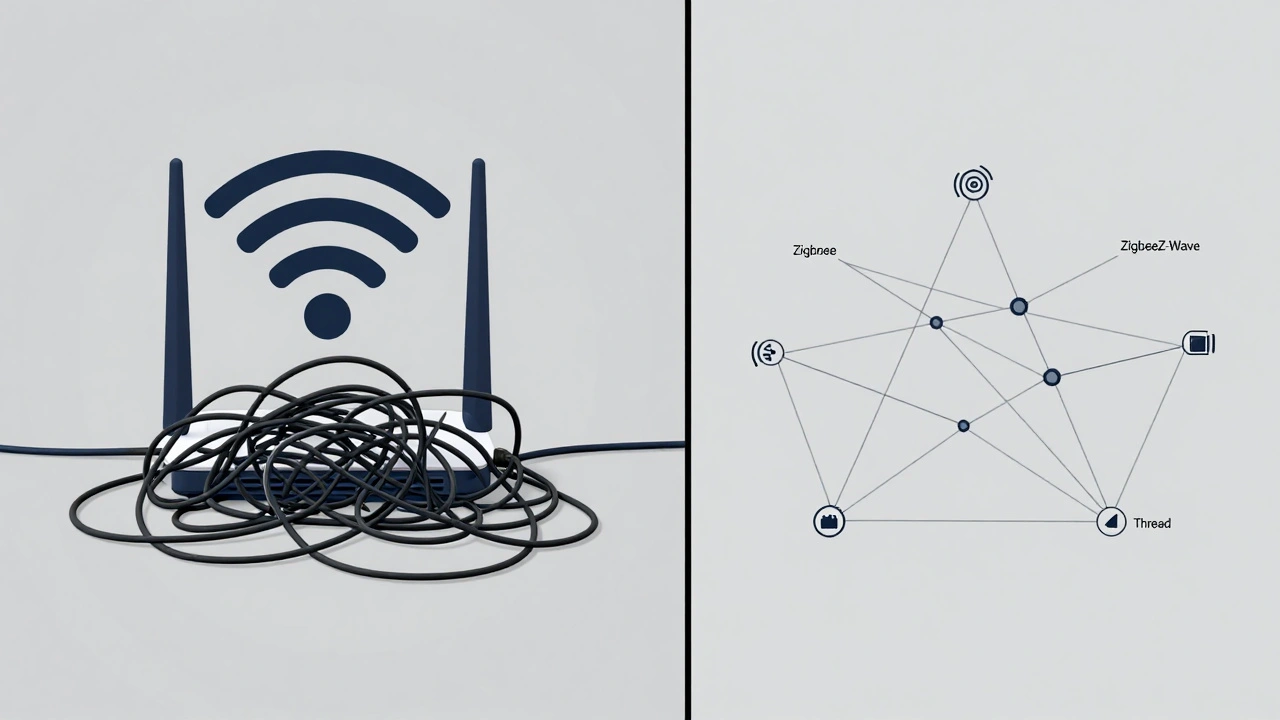
Comparison Table: Choosing the Right Protocol
| Feature | Matter | Zigbee | Z-Wave | Wi-Fi |
|---|---|---|---|---|
| Hub Required? | Yes (Controller) | Yes | Yes | No |
| Frequency Band | Wi-Fi / Thread (2.4 GHz) | 2.4 GHz | Sub-GHz (900 MHz) | 2.4 GHz / 5 GHz |
| Power Consumption | Low (via Thread) | Very Low | Very Low | High |
| Interference Risk | Medium | High | Low | High |
| Cross-Platform Support | Excellent | Limited (Hub-dependent) | Limited (Hub-dependent) | Varies by App |
| Best For | New Builds, Unified Ecosystems | Sensors, Lights, Budget Sets | Security, Large Homes | Cameras, Speakers, Plugs |
Building a Future-Proof Smart Home in 2026
So, which one should you choose? The answer is not one-size-fits-all. The best strategy is a hybrid approach that leverages the strengths of each protocol while preparing for the full transition to Matter.
If you are starting fresh, prioritize Matter-certified devices. They offer the longest lifespan and the easiest integration across platforms. Look for devices that support Matter over Thread for sensors and lights, and Matter over Wi-Fi for high-bandwidth appliances. This future-proofs your investment against platform lock-in.
For existing setups, don’t rush to replace working Zigbee or Z-Wave devices. Both protocols are stable and well-supported. Instead, ensure your hub supports both legacy protocols and Matter. Hubs like the Samsung SmartThings Station or Home Assistant setups allow you to bridge old and new technologies. You can keep your reliable Z-Wave door sensors while adding new Matter-compatible lights.
Avoid relying solely on Wi-Fi for everything. Reserve Wi-Fi for devices that need constant power and high data throughput, such as video doorbells and smart TVs. Use mesh networks (Zigbee, Z-Wave, or Thread) for sensors, switches, and lighting. This keeps your main Wi-Fi network clear for browsing and streaming, ensuring a smoother experience for everyone in the house.
Finally, consider the physical layout of your home. If you have thick concrete walls or a large square footage, Z-Wave’s sub-GHz range might outperform Zigbee or Thread. In smaller apartments, Wi-Fi and Matter-over-Wi-Fi might suffice. Test your signal strength before committing to a full ecosystem.
Do I need a hub if I use Matter?
Yes, technically you need a "controller." This can be a dedicated hub like an Apple TV, Amazon Echo Show, or Google Nest Hub, or even a smartphone acting as a border router for Thread devices. However, you do not need a separate, proprietary hub for each brand. One Matter-compatible controller can manage all your Matter devices.
Can Matter devices work with Zigbee or Z-Wave?
Not directly. Matter is a separate application layer. However, many modern hubs support all three protocols. Your hub translates between Matter, Zigbee, and Z-Wave, allowing them to interact in automations. For example, a Matter switch can trigger a Zigbee light if they are connected to the same multi-protocol hub.
Is Z-Wave dead now that Matter exists?
No. Z-Wave remains highly relevant, especially for security and professional installations due to its low interference and robust mesh. While Matter is growing, Z-Wave has a massive installed base and continues to receive updates. It will coexist with Matter for years to come.
Why does Wi-Fi drain batteries faster?
Wi-Fi radios are designed for high-speed data transfer, which requires significant power to maintain a constant connection with the router. Protocols like Zigbee, Z-Wave, and Thread use "sleepy" endpoints that wake up only briefly to send a small packet of data, then go back to sleep, preserving battery life for months or years.
What is Thread, and how does it relate to Matter?
Thread is a low-power mesh networking protocol based on IPv6. Matter uses Thread as one of its transport layers. Think of Thread as the road and Matter as the car driving on it. Thread provides the reliable, low-latency connection for battery-powered devices, while Matter defines how those devices communicate with your controllers.