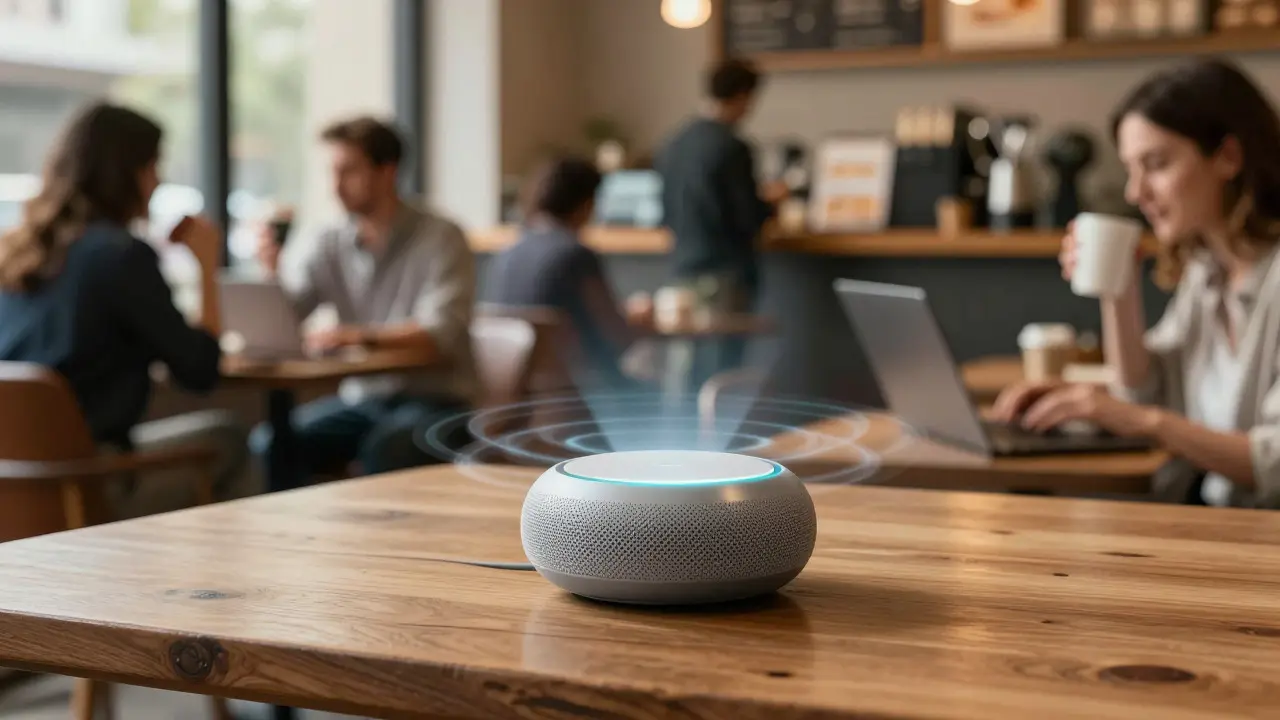
Imagine you are sitting in a bustling coffee shop or a busy open-plan office. You want to listen to your favorite podcast clearly, but the clatter of keyboards and chatter of coworkers is drowning out the music. This is where Noise-Canceling Smart Speakers come into play. These devices promise two things simultaneously: high-fidelity sound reproduction and reliable voice command recognition even in chaotic environments. But can they really do both well? The short answer is yes, but with significant trade-offs that depend heavily on how you prioritize your listening experience versus your interaction with the device.
The Core Conflict: Acoustic Isolation vs. Signal Clarity
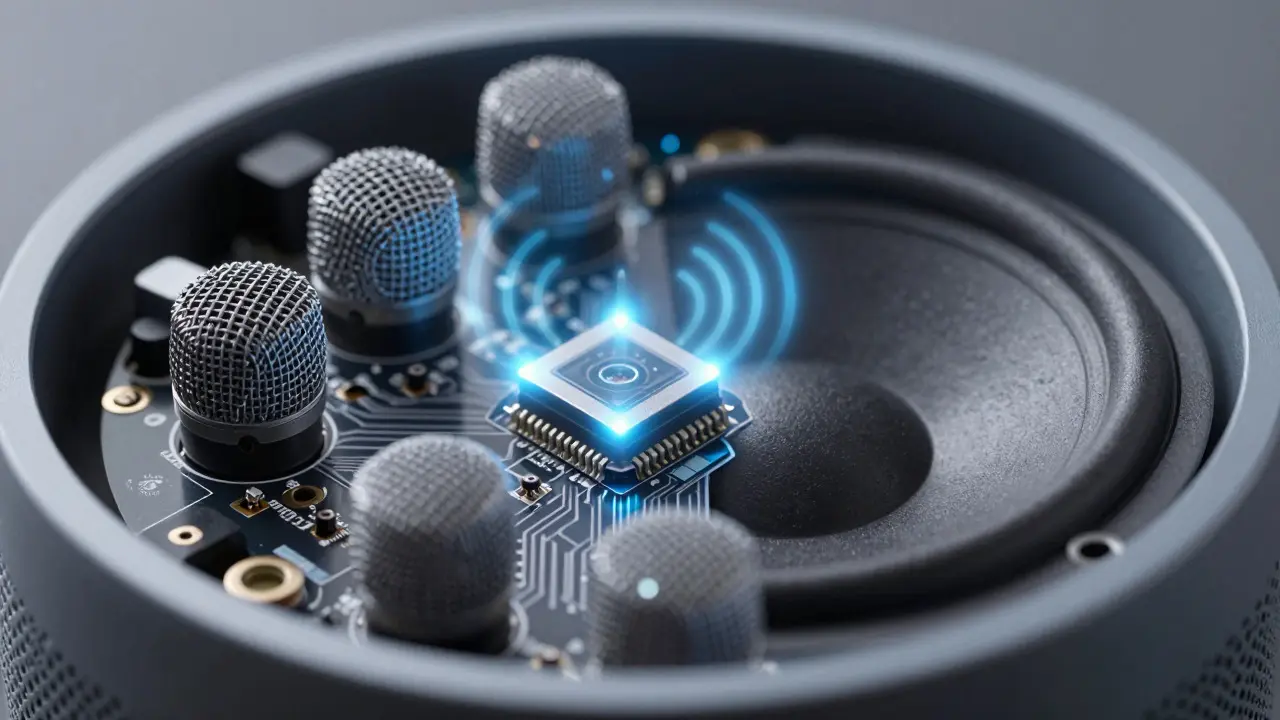
To understand why these speakers are tricky to engineer, we have to look at how sound works. Traditional smart speakers rely on an array of microphones to pick up your voice from across the room. They use beamforming technology to focus on the direction of the loudest sound source-hopefully, you. However, when background noise like traffic, construction, or loud TV static enters the mix, the microphones struggle to distinguish between your voice and the environment. This leads to missed commands or misinterpreted phrases.
Noise-canceling smart speakers attempt to solve this by incorporating active noise cancellation (ANC) principles similar to those found in premium headphones. Instead of just passively blocking external sounds, these speakers emit inverse sound waves to cancel out low-frequency ambient noise before it reaches the microphone array. This creates a "quiet zone" around the device, allowing the speech recognition algorithms to isolate your voice more effectively. However, this process consumes processing power and battery life, which can impact the fidelity of the audio output if not managed carefully.
Audio Quality: What You Actually Hear
When we talk about audio quality in this context, we aren't just talking about volume. We are discussing frequency response, distortion levels, and spatial imaging. Most mainstream smart speakers, such as the Amazon Echo series or Google Nest Audio, use dynamic drivers that offer decent bass for their size but often lack clarity in the mid-range frequencies where human voices reside. In a quiet room, this is acceptable. In a noisy room, however, the lack of clarity becomes glaring because the brain has to work harder to separate the signal from the noise.
Specialized noise-canceling models often compensate for this by using larger woofers or dual-driver setups. For instance, some recent releases feature dedicated tweeters for high-end details and subwoofers for deep bass. This separation allows the speaker to maintain definition even when the ANC system is working overtime. If you are an audiophile who cares about instrument separation and vocal nuance, you will notice that standard budget smart speakers flatten these details. A higher-end noise-canceling model preserves them, making the listening experience more immersive rather than just functional.
Voice Assistant Performance in Noisy Environments
This is where the real test begins. How does the device handle a request like "Play jazz" when a vacuum cleaner is running three feet away? Standard smart speakers often require you to raise your voice or stand closer to the unit. Noise-canceling models aim to reduce this friction. By filtering out consistent low-frequency hums (like HVAC systems or engine drones), the microphone array can focus on the transient, higher-frequency components of human speech.
However, there is a catch. Active noise cancellation is most effective against steady-state noise. It struggles significantly with erratic, high-frequency sounds like barking dogs, slamming doors, or sudden bursts of laughter. In these scenarios, the voice assistant may still stumble. Therefore, while these speakers excel in offices with constant air conditioning hum or cars with road noise, they may not be magic bullets for every chaotic household situation. Understanding this distinction helps set realistic expectations for daily use.
Key Technical Specifications to Compare
Not all noise-canceling smart speakers are created equal. When evaluating different models, you should look beyond marketing buzzwords and focus on specific technical attributes. Below is a comparison of typical features found in entry-level versus premium noise-canceling smart speakers.
| Feature | Entry-Level Model | Premium Model |
|---|---|---|
| Microphone Array | 3-mic array with basic beamforming | 6-mic array with AI-driven noise gating |
| Active Noise Cancellation | Passive isolation only | Hybrid ANC with adaptive algorithm |
| Frequency Response | 80 Hz - 15 kHz | 40 Hz - 20 kHz |
| Battery Life (Portable) | 8-10 hours | 12-15 hours |
| Distortion Level | < 2% THD | < 0.5% THD |
Notice the difference in Total Harmonic Distortion (THD). Lower numbers mean cleaner sound. If you are buying a portable speaker for outdoor use, the battery life combined with the effectiveness of the ANC determines whether you will actually use it frequently. A device that drains quickly or fails to block wind noise becomes useless in practice, regardless of its paper specs.
Real-World Scenarios: Office, Home, and Travel
Let's apply this knowledge to actual situations. Consider a remote worker in a shared apartment. The primary noise sources are likely neighbors' footsteps and occasional traffic. Here, a mid-range noise-canceling speaker performs exceptionally well. The consistent low-frequency rumble of city life is filtered out, allowing clear calls and relaxed music listening without raising the volume to uncomfortable levels.
Now consider a parent with young children. The noise here is unpredictable-crying, running, shouting. In this case, the advantage of ANC diminishes. The erratic nature of the noise means the speaker's algorithms constantly readjust, which can sometimes introduce latency or slight artifacts in the audio. For this user, a robust speaker with high volume capability might be more practical than one with complex noise cancellation that struggles to keep up with the chaos.
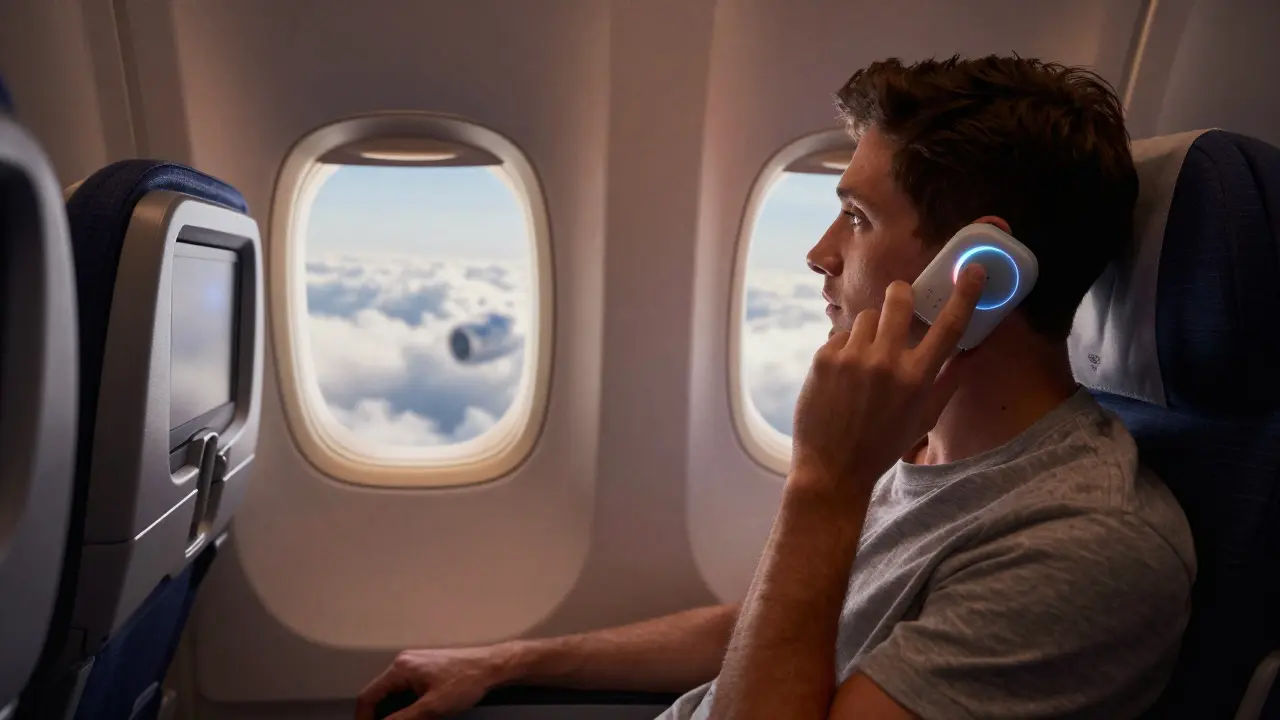
For travelers, portability meets performance. A compact noise-canceling speaker that fits in a backpack and handles airplane cabin drone is a game-changer. The constant 60Hz hum of jet engines is perfect for ANC. Once that is neutralized, the voice assistant becomes highly responsive, allowing you to control playback hands-free during security checks or gate changes.
Common Pitfalls and How to Avoid Them
Many buyers make the mistake of assuming that "noise-canceling" means "silent." It does not. It means "reduced ambient interference." If you expect the speaker to mute a loud conversation next door, you will be disappointed. The technology is designed to assist the microphone array, not to create a vacuum of silence.
Another pitfall is ignoring the ecosystem integration. Some noise-canceling speakers are locked into specific ecosystems, meaning they only work optimally with certain voice assistants or streaming services. If you switch platforms frequently, check compatibility first. Additionally, battery degradation over time can affect the performance of the ANC system, as it requires consistent power to generate inverse waves. Look for models with replaceable batteries or long-term warranty support if you plan to keep the device for several years.
Frequently Asked Questions
Do noise-canceling smart speakers drain battery faster?
Yes, typically. Active noise cancellation requires continuous processing to analyze ambient sound and generate counter-waves. This consumes more energy than passive listening. Expect a 15-20% reduction in total battery life compared to non-ANC models of similar size.
Can I turn off the noise cancellation feature?
Most modern models allow you to toggle ANC on or off via the companion app or a physical button. Turning it off extends battery life and reduces processing load, but makes the voice assistant less accurate in noisy rooms.
Which is better for voice commands: large speakers or small ones?
Larger speakers usually house more powerful amplifiers and better acoustic chambers, which can help project sound clearly over noise. However, smaller portable models with advanced mic arrays can match voice recognition accuracy in controlled environments. Size matters more for audio output volume than for voice input precision.
Does weather affect the performance of outdoor noise-canceling speakers?
Wind is the biggest enemy. While rain protection is common, strong gusts can disrupt the microphone array's ability to detect your voice. Most manufacturers recommend using a windscreen or reducing volume in high winds to maintain command accuracy.
Are noise-canceling smart speakers worth it for home use?
If your home has consistent background noise (HVAC, street traffic), yes. The improved voice accuracy and clearer audio justify the extra cost. If your home is generally quiet, a standard smart speaker offers better value for money since the ANC feature will rarely be needed.