Most people think they know how to save money on heating and cooling. You buy a programmable thermostat, set it back at night, and forget about it. But here is the uncomfortable truth: studies consistently show that up to 50% of programmable thermostats are never actually programmed. They sit there, running inefficiently, while you pay extra every month for comfort you didn't even ask for.
If you are standing in the aisle at Home Depot or scrolling through Amazon, staring at two similar-looking boxes, you might wonder if the price difference is worth it. One says "Programmable." The other says "Learning" or "Smart." Is one actually better? Or is it just marketing fluff?
The Core Difference: Manual Control vs. Automated Intelligence
To decide which is right for your house, you need to understand what these devices actually do. It isn't just about setting a temperature; it's about who does the work.
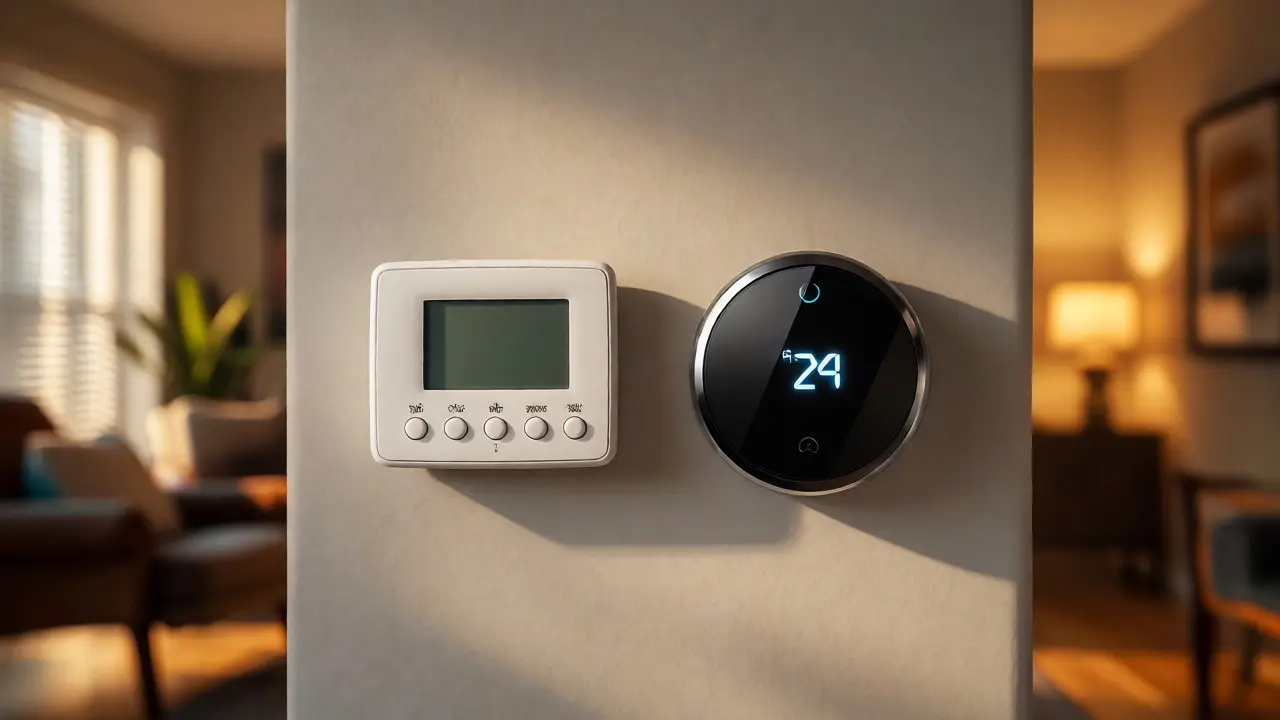
A programmable thermostat is a digital timer with temperature controls. It follows rules you create. You tell it: "At 7:00 AM, make the house 72 degrees. At 9:00 AM, drop it to 68 degrees." It does exactly that, every single day, unless you manually override it. It has no brain. It doesn't know if you left the window open, if you’re sick and staying in bed, or if a heatwave hit unexpectedly. It only knows the schedule you typed into it.
In contrast, a learning thermostat (often called a smart thermostat) uses algorithms and sensors to observe your behavior. Devices like the Nest Learning Thermostat or the Ecobee SmartThermostat watch when you adjust the temperature. After a few weeks, they build a profile of your habits. If you always turn the heat down at 10 PM and up at 6 AM, the learning thermostat figures this out without you touching a button. It can also detect if no one is home using motion sensors or geofencing via your phone, adjusting the climate automatically to save energy.
When a Programmable Thermostat Wins
Don’t dismiss the basic programmable model just because it’s older tech. For certain households, it is still the superior choice.
You have a rigid, unchanging schedule. If you leave for work at 8:00 AM sharp every weekday and return at 5:30 PM, a programmable thermostat works perfectly. Once you program those times, you never have to think about them again. It’s simple, reliable, and doesn’t require Wi-Fi. If your internet goes down, your heat still turns off when you leave. There is no cloud server involved, no app to update, and no privacy concerns about data sharing.
Budget is tight. A high-quality programmable thermostat from brands like Honeywell or Emerson costs between $40 and $80. A learning thermostat typically starts around $150 and can go up to $300. If you are renting and plan to move in six months, spending $250 on a device you’ll take with you might not yield enough ROI to justify the hassle.
You hate technology glitches. Smart thermostats rely on software. Sometimes updates break features. Sometimes the Wi-Fi drops, and you can’t control the heat from your couch. A programmable unit has fewer points of failure. It’s mechanical simplicity in a digital shell.
Why Learning Thermostats Are Usually Better for Most Homes
For most homeowners, especially those with irregular schedules or families, the learning thermostat offers tangible benefits that outweigh the higher upfront cost.
It accounts for real-life chaos. Life rarely fits into a 9-to-5 box. Maybe you worked late Tuesday. Maybe you had guests over on Saturday and kept the house warm longer than usual. A programmable thermostat doesn’t care; it sticks to the script. A learning thermostat notices you turned the heat up manually and adjusts its future predictions accordingly. Over time, it becomes more accurate than any manual schedule could ever be.
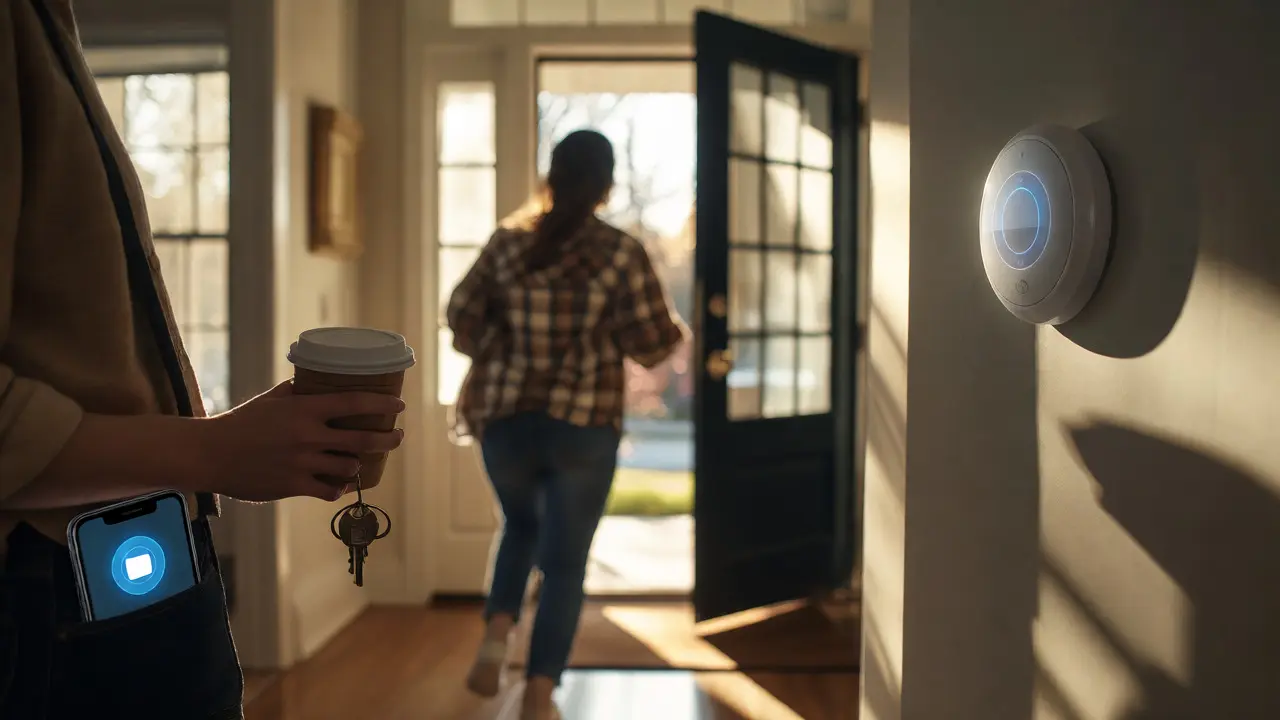
Geofencing saves energy when you’re away. This is the killer feature. Using your smartphone’s location, a learning thermostat knows when the last person leaves the house. If you usually leave at 8 AM but stayed until 10 AM, the thermostat waits. If you drive past your house after work, it starts pre-heating or cooling before you walk through the door. This prevents the common mistake of leaving the AC running all day for an empty house.
Energy reports provide actionable insights. Most learning thermostats send monthly emails showing exactly how much energy you saved compared to neighbors or previous months. Seeing that you used 15% less gas than last year motivates you to keep up the good work. Programmable thermostats offer no feedback loop.
| Feature | Programmable Thermostat | Learning (Smart) Thermostat |
|---|---|---|
| Initial Cost | $40 - $80 | $150 - $300+ |
| Setup Effort | High (Manual programming required) | Low (Auto-learning or App-based) |
| Adaptability | None (Follows fixed schedule) | High (Learns habits, adapts to changes) |
| Remote Control | Rare / Basic models only | Yes (Via Smartphone App) |
| Internet Required | No | Yes (For full features) |
| Best For | Strict routines, low budgets | Busy families, irregular schedules |
The Hidden Costs of Installation and Compatibility
Before you buy, check your wiring. This trips up many DIYers.
Older homes often lack a C-wire (common wire). The C-wire provides continuous power to the thermostat. Programmable thermostats run on batteries, so they don’t need a C-wire. Many learning thermostats require constant power for their screens and Wi-Fi radios. If you don’t have a C-wire, you might need an adapter kit (like the Nest Power Connector) or hire an electrician, adding $50-$100 to the project cost. Always check your existing wires before ordering online.
Also, consider your HVAC system type. Most learning thermostats work fine with standard forced-air systems (gas furnace + central AC). However, if you have a multi-stage system, a heat pump with auxiliary heat, or a boiler system, compatibility checks are crucial. Some basic programmable units struggle with complex heat pumps, causing inefficient operation. High-end smart thermostats usually handle these complexities better, but you must verify support for your specific equipment model.
Real-World Savings: Do They Actually Pay Off?
Let’s look at the numbers. The U.S. Department of Energy suggests that turning your thermostat back 7°-10°F for 8 hours a day can save you up to 10% a year on heating and cooling. That’s roughly $100-$150 annually for an average household in climates like Portland, Oregon, where we use both heating and cooling moderately.
A programmable thermostat achieves this *only* if you program it correctly and stick to it. If you forget to change the setting when you go on vacation, you waste money.
A learning thermostat automates this process. Because it reduces human error, it often captures closer to the maximum potential savings. Plus, features like "Eco Mode" during vacations ensure you aren’t heating an empty house. While the upfront cost is higher, the break-even point is typically 2-3 years. After that, the savings are pure profit. In my experience helping friends in the Pacific Northwest retrofit their homes, the convenience alone was worth the price tag, even if the financial savings were modest.
Which Should You Buy?
Here is a quick decision tree to help you choose:
- Buy a Programmable Thermostat if: Your schedule is identical every day, you want to spend under $60, you have no Wi-Fi, or you prefer zero-tech solutions.
- Buy a Learning Thermostat if: Your schedule varies, you travel often, you want remote control from your phone, you value detailed energy reports, or you already own other smart home devices (Alexa, Google Home).
Personally, I lean toward learning thermostats for primary residences. The mental load of remembering to adjust the heat is gone. For a rental property or a guest house, however, a simple programmable unit is hard to beat for reliability and cost.
Do learning thermostats really save money?
Yes, but mostly by reducing human error. Studies indicate that smart thermostats can reduce heating and cooling bills by 10-15% on average. However, this depends heavily on whether the user previously had a poorly managed or unprogrammed thermostat. If you already manually adjusted your old dial diligently, savings may be smaller.
Can I install a learning thermostat myself?
If you are comfortable working with low-voltage wiring, yes. Most modern learning thermostats come with clear video guides. The main hurdle is identifying the wires behind your old unit. If you see a blue wire labeled 'C', installation is straightforward. If not, you may need a power adapter kit or professional help.
What happens if my Wi-Fi goes out?
Your learning thermostat will continue to operate based on its last known schedule and local sensor readings. You lose remote access and some advanced features like weather integration, but your house will still heat and cool according to its learned patterns. It won't stop working entirely.
Are learning thermostats compatible with all HVAC systems?
Not all. They work best with standard central air and forced-air furnaces. They generally support heat pumps, but complex systems like dual-fuel setups or hydronic (boiler/radiator) systems require checking specific model compatibility. Always use the manufacturer's online compatibility checker before buying.
Is privacy a concern with smart thermostats?
Smart thermostats collect data on your occupancy patterns, which can infer when you are home or away. Companies like Google (Nest) and Amazon (Ring/Ecobee) use this data for service improvement. You can usually opt-out of data sharing in the settings, though this may disable some predictive features.