You’re standing in the electrical aisle, staring at boxes labeled DALI, DMX, and Zigbee. The salesperson smiles politely, but you feel like you need a degree in electrical engineering just to buy a light bulb. It’s frustrating because all three promise the same thing: smarter, more flexible lighting. But they deliver it in wildly different ways.
Here is the hard truth: mixing these up can cost you thousands in re-wiring or leave you with a system that glitches every time your Wi-Fi hiccups. If you are building a new home or retrofitting an older one, understanding the language your lights speak is critical. You don’t need to become an electrician, but you do need to know which protocol matches your lifestyle, your budget, and your tolerance for complexity.
Quick Summary / Key Takeaways
- Zigbee is the best choice for most homeowners due to its wireless nature, mesh networking reliability, and massive ecosystem of compatible devices.
- DALI (Digital Addressable Lighting Interface) offers superior precision for dimming and color control but requires dedicated two-wire cabling, making it ideal for high-end custom builds.
- DMX512 is overkill for residential use unless you have complex stage-like effects or theatrical needs; it lacks the bi-directional feedback needed for reliable home automation.
- Hybrid systems are common: many modern drivers allow you to bridge Zigbee commands to DALI fixtures, giving you the best of both worlds.
Why Your Lighting Protocol Matters More Than the Bulb
Most people think about smart lighting in terms of brands-Philips Hue, Lutron Caséta, or generic Amazon Basics bulbs. But those are just interfaces. Underneath, the hardware speaks a specific protocol. Think of it like internet browsers: Chrome, Safari, and Firefox look different, but they all rely on HTTP to fetch websites. In lighting, DALI, DMX, and Zigbee are the "HTTPs" of the smart home world.
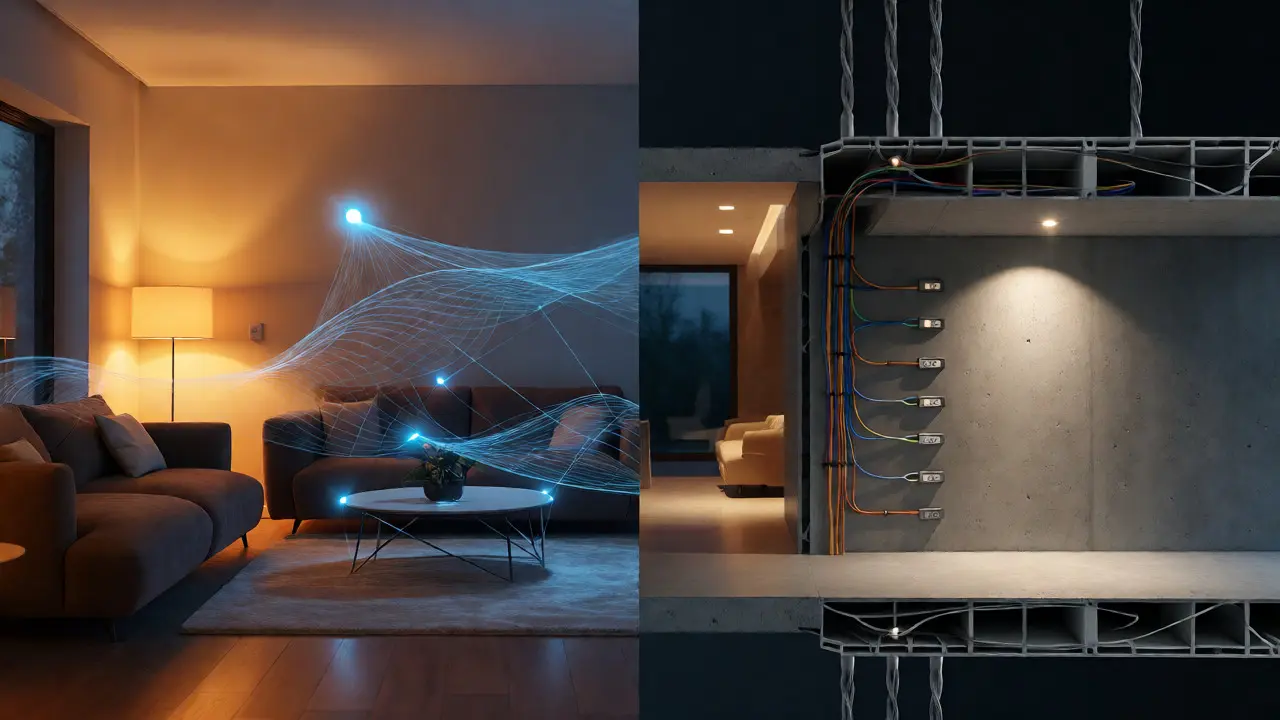
If you choose the wrong protocol, you aren't just buying a different brand; you are committing to a specific infrastructure. Zigbee is a low-power wireless communication standard designed for short-range communications. It relies on a mesh network, meaning each device helps relay signals to others. This makes it incredibly robust for homes where walls might block signals. In contrast, DALI is a digital serial data protocol used for controlling digital lighting ballasts. It requires physical wires connecting every driver back to a central controller. There is no magic here-physics dictates performance.
The stakes are high because lighting is permanent. You can swap out a smart speaker if it breaks. You cannot easily swap out the wiring behind your drywall once the house is built. Choosing Zigbee means you can add sensors and switches anywhere without cutting into walls. Choosing DALI means you get precise, flicker-free dimming that analog systems simply cannot match, provided you plan the wiring correctly during construction.
Zigbee: The Wireless Workhorse for Modern Homes
If you are looking for flexibility and ease of installation, Zigbee is likely your winner. It operates on the 2.4 GHz frequency band, similar to Wi-Fi and Bluetooth, but uses less power and creates a self-healing mesh network. What does "self-healing" actually mean? If one smart plug loses power, the signal from your living room switch can reroute through the hallway lamp to reach the bedroom fan. This redundancy is why Zigbee rarely fails in large homes.
The ecosystem is vast. Because Zigbee Alliance (now part of CSA - Connectivity Standards Alliance) set open standards, manufacturers like IKEA, Philips Hue, and SmartThings build compatible products. You can mix and match. Buy a Hue bulb for the kitchen and an IKEA sensor for the closet. They will talk to the same hub.
However, Zigbee has limitations. It is not great for high-speed data transfer. It sends small packets of information-"turn on," "set brightness to 50%." It doesn't handle streaming audio or video well. Also, while it avoids Wi-Fi congestion, it can still suffer interference if you have dozens of other 2.4 GHz devices. But for lighting, where latency needs to be under 100 milliseconds for a human-perceptible instant response, Zigbee performs exceptionally well.
DALI: Precision Control for High-End Installations
DALI stands for Digital Addressable Lighting Interface. It was developed by major lighting manufacturers to replace clunky analog 0-10V dimming systems. Unlike Zigbee, DALI is wired. Every fixture connects via two twisted-pair wires that carry both power and data. This separation is crucial. It means your lighting control isn't dependent on radio waves passing through concrete or metal studs.
Why would anyone bother with wires when wireless works? Precision. DALI offers 256 steps of dimming resolution compared to the typical 8-bit (256 levels) or sometimes lower effective resolution of cheaper wireless protocols. More importantly, DALI supports bi-directional communication. The light tells the controller its status. Did the bulb burn out? Is the driver overheating? With Zigbee, you often have to guess or wait for a timeout error. With DALI, the system knows immediately.
This makes DALI ideal for luxury homes, offices, and galleries where consistent color temperature and smooth fades are non-negotiable. If you have watched a cheap smart bulb try to fade from 10% to 0% and seen it stutter or jump, you’ve experienced poor dimming curve management. DALI handles this smoothly because the intelligence is in the driver, not just the cloud command.
DMX512: When Theater Meets Residential
You might have heard of DMX512 as the standard for professional stage lighting. Originally created for theaters and concerts, it allows hundreds of lights to change color and intensity instantly in sync. Some homeowners fall in love with the idea of having "club-style" lighting in their man-cave or media room.
But there is a catch: DMX is unidirectional. The controller shouts commands, but the lights don't talk back. If a DMX fixture fails, the controller doesn't know until someone visually inspects it. Furthermore, DMX requires specific cabling (usually XLR connectors or shielded twisted pair) and addresses each light individually. Setting up a DMX system in a home is complex. You need a dedicated controller, and integrating it with voice assistants like Alexa or Google Home usually requires a middleware gateway.
Unless you are installing LED strips for dynamic color-changing scenes across multiple rooms simultaneously, DMX is probably too heavy-handed for a standard residence. It shines in scenarios where timing is everything-like syncing lights to music-but for general illumination, it lacks the feedback loops that make home automation reliable.
Comparison Table: Choosing the Right Protocol
| Feature | Zigbee | DALI | DMX512 |
|---|---|---|---|
| Connection Type | Wireless Mesh | Wired (Two-Wire) | Wired (Serial) |
| Best For | Retrofits & Standard Homes | New Construction & Luxury | Theatrical Effects & Media Rooms |
| Dimming Quality | Good (depends on bulb) | Excellent (Smooth & Precise) | Fast but can stutter |
| Installation Cost | Low (No new wires) | High (Requires pre-wiring) | Medium-High (Specialized cabling) |
| Feedback | Yes (Bi-directional) | Yes (Detailed diagnostics) | No (Unidirectional) |
| Ecosystem Size | Huge (Consumer focused) | Large (Commercial/Pro focused) | Niche (Entertainment focused) |
Bridging the Gap: Hybrid Solutions
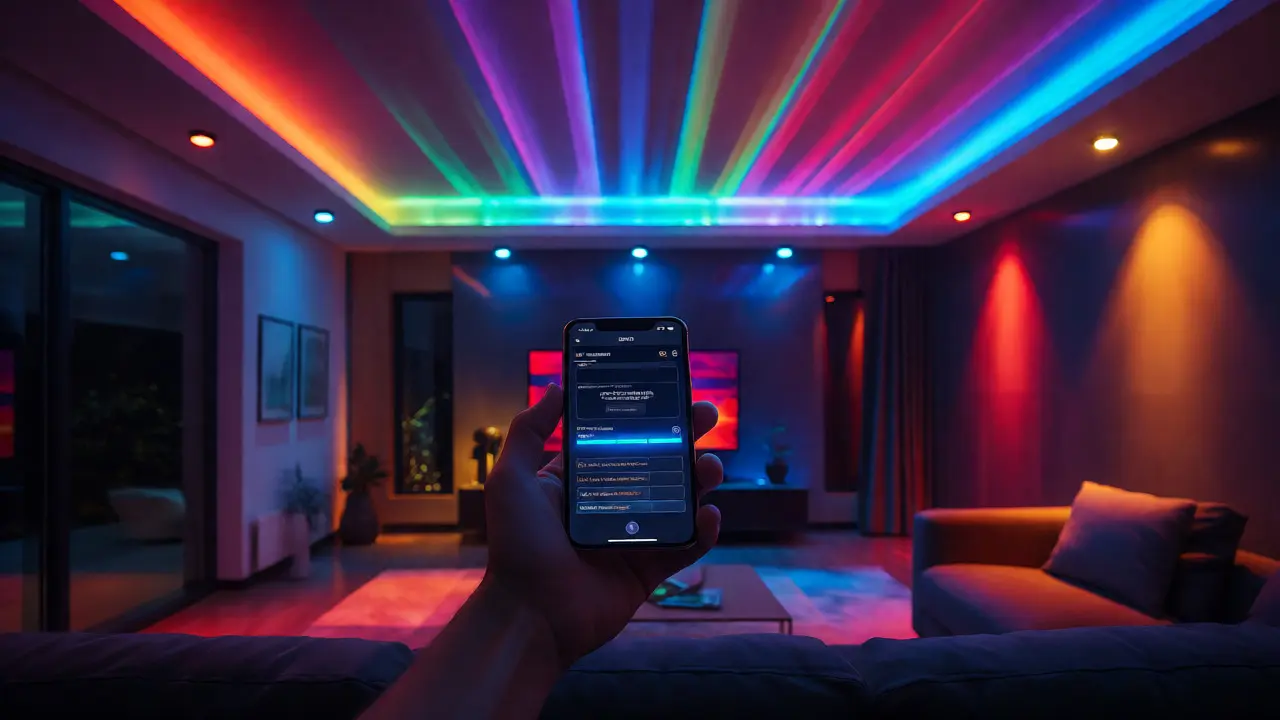
Here is where things get interesting. You don't always have to pick one lane. Many modern lighting drivers support multiple inputs. A popular setup involves using a Zigbee Gateway that converts wireless commands into DALI signals. This allows you to control high-quality DALI fixtures using the convenience of a Zigbee app or voice assistant.
For example, companies like Lutron or specialized integrators offer bridges that take a Zigbee command ("Set Living Room to Movie Mode") and translate it into a DALI sequence. This gives you the user-friendly interface of consumer tech with the industrial-grade reliability of wired lighting. This hybrid approach is becoming increasingly common in high-end renovations where the homeowner wants the aesthetic simplicity of wireless switches but the performance depth of wired controls.
Another emerging trend is Matter. While Matter itself is an application layer, it often rides on top of Thread (a low-power IP-based protocol similar to Zigbee). As Matter matures, we may see fewer distinct choices between protocols and more unified ecosystems. However, for now, knowing whether your hardware speaks DALI, DMX, or Zigbee remains essential for compatibility.
Practical Tips for Homeowners
If you are currently planning a project, consider these rules of thumb:
- Check the Driver: Never buy a fixture without knowing what driver it uses. A beautiful chandelier is useless if it comes with an incompatible proprietary driver. Look for "DALI-ready" or "Zigbee-native" labels.
- Plan for Neutral Wires: Even if you go wireless (Zigbee), ensure your switch boxes have neutral wires. This future-proofs you for smart switches that require constant power, regardless of the protocol.
- Limit DMX to Zones: If you want DMX effects, restrict them to a single media room or outdoor party area. Don't wire the whole house for DMX unless you enjoy troubleshooting address conflicts.
- Test Latency: Before committing to a wireless system, test how long it takes for a command to execute. If it feels sluggish, check for interference or consider adding more mesh nodes (plugs/lights) to strengthen the signal path.
Frequently Asked Questions
Can I convert existing analog lights to DALI?
Yes, but it requires replacing the existing drivers/ballasts with DALI-compatible ones. You also need to run the two-wire DALI cable from the controller to each fixture. If your current wiring is just standard Romex (power only), you will need to pull additional low-voltage cables, which can be difficult in finished walls.
Is Zigbee better than Wi-Fi for smart lighting?
Generally, yes. Wi-Fi consumes more power and congests your router with dozens of small devices. Zigbee creates its own separate network, reducing load on your main router and offering better battery life for battery-powered sensors and remotes. Wi-Fi is fine for a few bulbs, but Zigbee scales much better for whole-home automation.
Do I need a hub for DALI lighting?
Yes. DALI is a control protocol, not a standalone system. You need a DALI gateway or controller to send commands to the fixtures. This controller can then connect to your home automation system (like Home Assistant, Crestron, or a dedicated wall panel) via Ethernet, RS-232, or even Zigbee/Wi-Fi bridges.
Which protocol is cheapest to install?
Zigbee is usually the cheapest for retrofits because it requires no new wiring. You simply screw in the bulbs and add plugs. DALI has higher upfront costs due to cabling and specialized drivers. DMX falls somewhere in between but often requires professional programming, adding labor costs.
Will my smart lights work if the internet goes down?
It depends on the architecture. Zigbee and DALI controllers typically process logic locally. So, if your local network is up but the internet is down, your schedules and manual switches will still work. Cloud-dependent Wi-Fi lights often fail to respond to apps during outages, though physical buttons usually remain functional.
Next Steps for Your Project
Start by mapping your rooms. Do you need simple on/off and dimming? Go with Zigbee. Do you need intricate color scenes and architectural lighting integration? Look into DALI. Are you building a home theater with synchronized RGB strips? Consider a localized DMX zone. Once you decide, consult with an electrician who has experience with smart home protocols-not just standard residential wiring. Ask them specifically about their experience with DALI cabling or Zigbee mesh optimization. The right partner will save you headaches later.