Quick Takeaways
- Sonos leads in multi-room wireless ease and app integration, making it ideal for casual listeners who want music everywhere without cables.
- Denon dominates in high-fidelity performance, offering superior surround sound processing and connectivity options for movie buffs and audiophiles.
- Budget-friendly alternatives like Vizio and TCL provide solid entry-level soundbars, while Bose remains a strong competitor for compact, premium portable audio.
- Your choice depends on your priority: seamless streaming (Sonos) versus cinematic immersion and hardware control (Denon).
- Hybrid setups are possible; you can pair Sonos speakers with a Denon receiver for a best-of-both-worlds experience.
You walk into your living room, press play, and expect the bass to thump and the dialogue to be crystal clear. But instead, you get a muddy mess or a system that requires three remotes just to turn up the volume. This is the modern dilemma of home entertainment audio. The market is flooded with brands promising the perfect soundscape, but they often serve very different purposes. In 2026, the divide isn't just about price-it's about philosophy. Do you want an ecosystem that disappears into the background, or do you want a piece of hardware that demands respect?
The two giants dominating this conversation are Sonos, a pioneer in wireless multi-room audio systems known for its user-friendly interface and seamless streaming capabilities and Denon, a legacy audio manufacturer renowned for high-performance AV receivers and professional-grade sound processing. While others like Bose, Klipsch, and Yamaha have their place, these two represent the distinct paths most homeowners take. Let’s break down which one fits your lifestyle, your budget, and your walls.
The Sonos Experience: Wireless Freedom and Simplicity
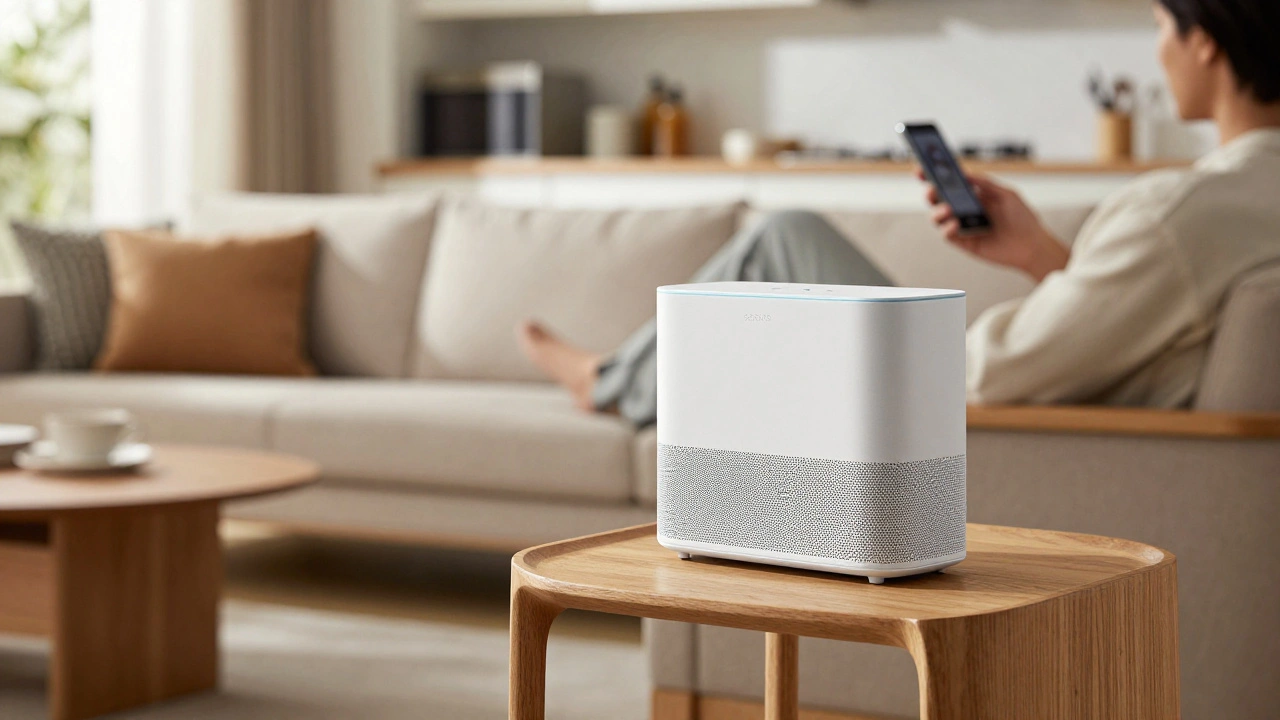
If your idea of a good evening involves playing jazz in the kitchen while cooking and then seamlessly transitioning that same playlist to the living room couch without missing a beat, Sonos is built for you. Sonos didn’t invent wireless audio, but they perfected the consumer experience around it. Their core strength lies in Trueplay, an automatic room-calibration technology that uses the microphone in your smartphone to adjust EQ settings based on the acoustics of your specific space.
Here is why people stick with Sonos:
- App-Centric Control: You rarely need a remote. The Sonos app is intuitive, allowing you to group speakers, adjust individual channel balances, and access virtually every streaming service from one dashboard.
- Expandability: You can start with a single Sonos One speaker and eventually build a whole-house system. Adding a subwoofer like the Sonos Sub later is as easy as plugging it in.
- Aesthetic Design: Sonos speakers look like furniture accessories rather than tech gadgets. They blend into modern decor without screaming "electronics."
However, there is a catch. Sonos has historically been closed off regarding traditional wired connections. While newer models support AirPlay 2 and Chromecast, integrating them into a complex home theater setup with an external AVR (Audio Video Receiver) used to be a headache. As of 2025 and 2026, this has improved, but if you love tinkering with HDMI-ARC eARC settings and optical inputs, Sonos might feel restrictive. It is designed for listeners, not tinkerers.
The Denon Advantage: Power, Precision, and Cinema
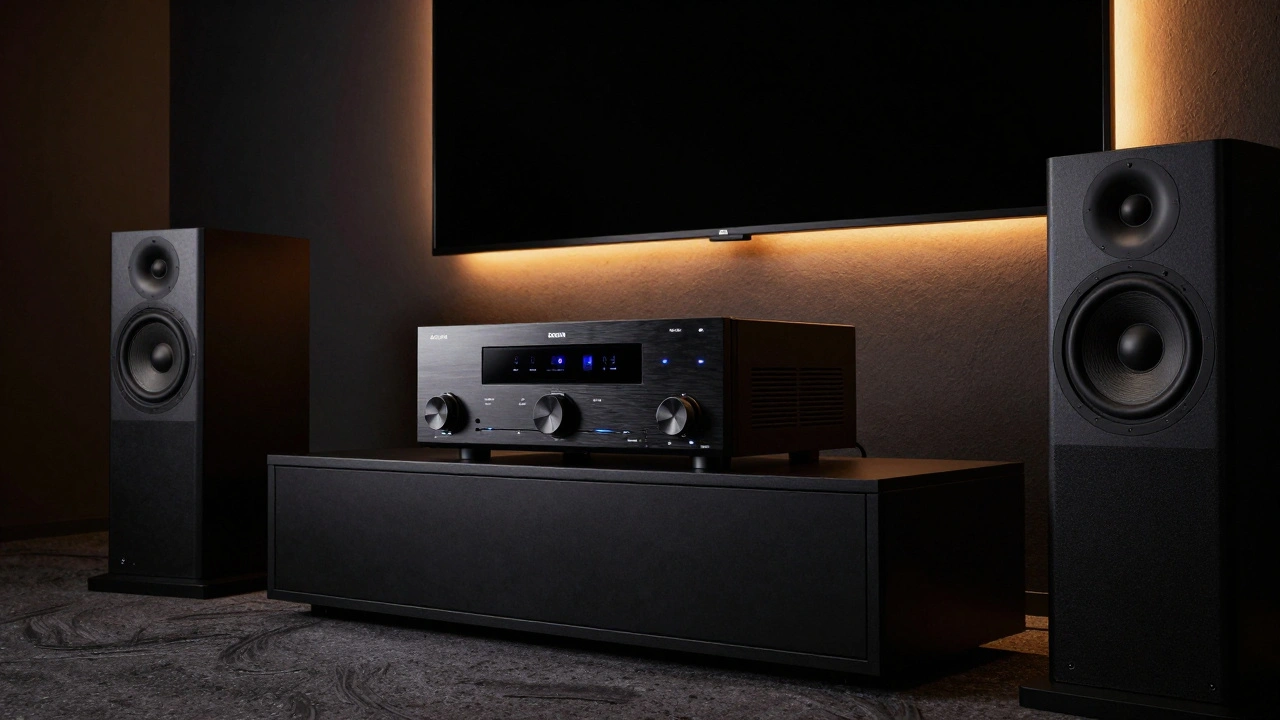
Now, imagine you are watching a blockbuster action movie. You want to hear the subtle rustle of leaves in the background and the explosive boom of a spaceship landing. You want dynamic range. This is where Denon shines. Denon is not trying to hide; it is trying to impress. Their AV Receivers, central hub devices that process audio and video signals from multiple sources and distribute them to speakers, supporting formats like Dolby Atmos and DTS:X are the brains of serious home theaters.
Denon’s reputation rests on a few key pillars:
- High-Fidelity Processing: Denon receivers handle complex audio codecs like Dolby Atmos and DTS:X with precision. They ensure that height channels and surround effects are rendered accurately, creating a true 3D soundstage.
- Connectivity Depth: A Denon receiver is a Swiss Army knife. It has multiple HDMI ports (often 8K ready), Bluetooth, Wi-Fi, and dedicated pre-outs for amplifiers. If you have a gaming console, a Blu-ray player, a cable box, and a soundbar, Denon manages them all.
- Build Quality: Denon components are heavy, robust, and built to last decades. They use high-quality capacitors and heat sinks that keep performance stable even during long listening sessions.
The downside? Complexity. Setting up a Denon system requires reading manuals, running speaker wires through walls, and configuring menus. It is not plug-and-play. If you buy a Denon SoundBar, you get great sound, but you miss out on the deep customization that their receivers offer. For pure convenience, Denon loses to Sonos. For pure performance, Denon wins hands down.
Other Contenders Worth Considering
Sonos and Denon are the titans, but they aren’t the only players. Depending on your specific needs, other brands might offer better value or specialized features.
Bose remains a top choice for those who prioritize compact size and vocal clarity. Their Bose Smart Soundbar 600 is excellent for small apartments where space is at a premium. Bose excels at making small drivers sound larger than life, though purists often argue they lack the raw power of Denon.
Klipsch appeals to fans of horn-loaded technology. If you like bright, energetic sound with punchy highs, Klipsch speakers and soundbars deliver excitement. They are also visually distinctive, often featuring brass tweeters that add a retro-modern flair.
For budget-conscious buyers, Vizio and TCL have disrupted the market. Their Vizio V-Series soundbars offer surprising value, providing Dolby Atmos decoding and decent bass at a fraction of the cost of premium brands. They won’t replace a high-end receiver, but for a basic TV upgrade, they are hard to beat.
Comparison: Sonos vs. Denon at a Glance
| Feature | Sonos | Denon |
|---|---|---|
| Primary Strength | Wireless multi-room ease | Cinematic surround sound & connectivity |
| Setup Difficulty | Low (Plug & Play) | Medium to High (Wiring & Configuration) |
| Best For | Music lovers, casual viewers | Movie buffs, gamers, audiophiles |
| Price Range | $100 - $700+ per speaker | $300 - $1,500+ for receivers/systems |
| Smart Home Integration | Excellent (Alexa, Google, Siri) | Good (via HEOS app & voice assistants) |
| Expandability | Add wireless speakers easily | Add wired speakers & amplifiers |
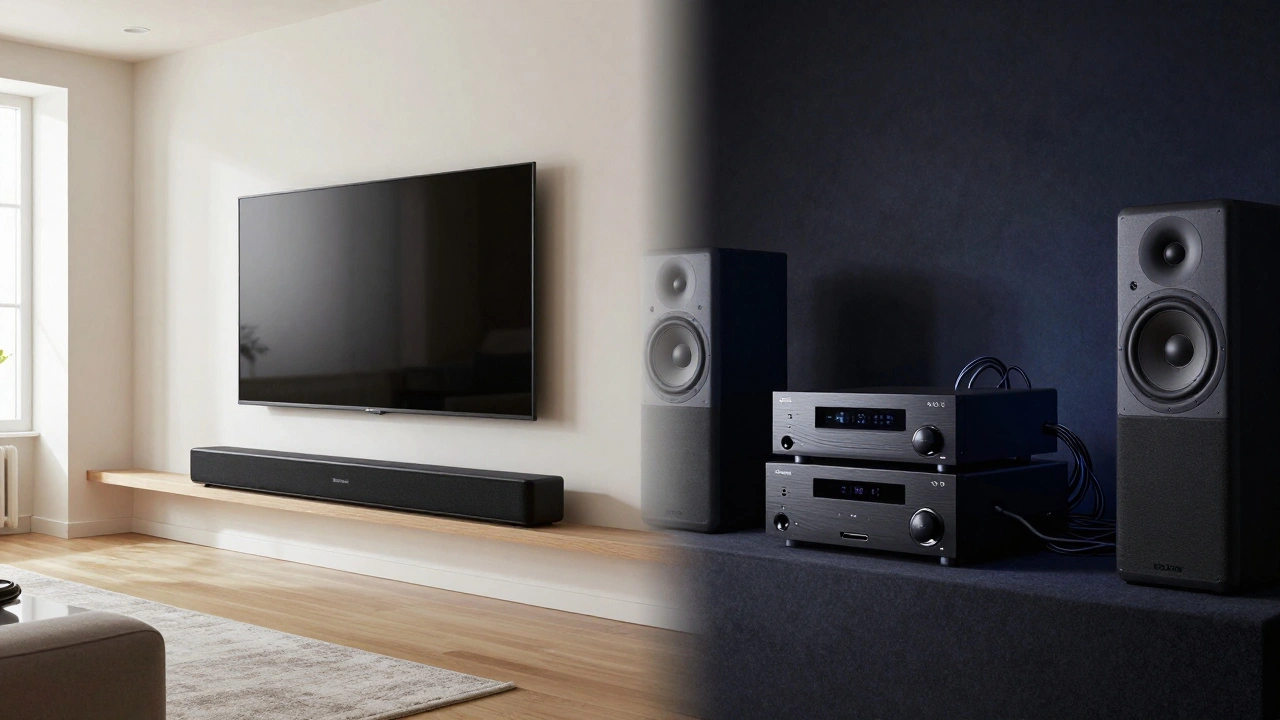
Building Your System: Practical Scenarios
Choosing between these brands isn't always binary. Your decision should hinge on your "job-to-be-done"-what do you actually want to achieve with your audio?
Scenario 1: The Apartment Dweller
You live in a city apartment with thin walls and limited space. You watch Netflix and listen to Spotify. You don’t want visible wires.
Recommendation: Go with Sonos. A Sonos Beam or Arc soundbar paired with a Sonos Sub will fill your room with rich sound without requiring any installation beyond plugging into a wall outlet. The Trueplay calibration will compensate for the odd shapes of urban living rooms.
Scenario 2: The Movie Enthusiast
You have a dedicated media room or a large living area. You own a 4K projector or a large OLED TV. You care about immersive soundtracks and gaming latency.
Recommendation: Choose Denon. Pair a Denon AVR-S series receiver with a set of floor-standing speakers and a center channel. This setup provides discrete surround sound channels that wireless systems struggle to replicate with low latency. The ability to switch instantly between your Xbox, PlayStation, and Apple TV via HDMI is crucial here.
Scenario 3: The Hybrid Approach
You want the best of both worlds. You want a powerful home theater for movies but also want music flowing to your bedroom and kitchen.
Recommendation: Build a hybrid system. Use a Denon receiver for your main living room theater setup. Then, integrate Sonos speakers in other rooms. Many modern Denon receivers support multi-zone audio, meaning you can send a secondary signal to another room. Alternatively, use Sonos for music throughout the house and rely on a high-quality soundbar (like the Sonos Arc, which works well with Denon receivers via HDMI eARC) for the main TV.
Pitfalls to Avoid
Before you spend hundreds of dollars, keep these common mistakes in mind:
- Ignoring Room Acoustics: No brand can fix a dead, echoey room entirely. Add rugs, curtains, or bookshelves to dampen reflections. Both Sonos and Denon have room correction tools, but physical absorption helps more.
- Underestimating Bass Needs: Soundbars alone rarely deliver satisfying low-end frequencies. If you love action movies or hip-hop, invest in a separate subwoofer. The Sonos Sub is expensive but worth it for its clean output. Denon pairs well with third-party subs like SVS or Klipsch.
- Buying Outdated Tech: Ensure your equipment supports HDMI eARC. This standard allows for higher quality audio return from your TV to your soundbar or receiver. Older ARC standards may limit your access to lossless audio formats.
Final Thoughts on Brand Loyalty
In 2026, brand loyalty matters less than ecosystem compatibility. Ask yourself: What devices do you already own? If you are deeply invested in the Apple ecosystem, Sonos integrates beautifully with AirPlay 2 and Apple Music. If you are a Android user or prefer open-source flexibility, Denon’s HEOS platform offers broader control over individual audio parameters.
Ultimately, the "best" brand is the one you will actually use. Sonos removes friction, encouraging you to listen more because it is so easy. Denon rewards effort, offering a deeper, more nuanced experience for those willing to configure it. Neither is wrong; they are just different keys to the same door. Choose the key that fits your lock.
Can I connect Sonos speakers to a Denon receiver?
Yes, but with limitations. You can connect Sonos speakers to a Denon receiver using RCA cables from the receiver's pre-out ports to the Sonos input (if available) or by using the Sonos Port adapter. However, this setup does not allow full bi-directional control. You cannot control the Denon receiver directly from the Sonos app, and vice versa. For seamless integration, many users prefer keeping the systems separate or using a Sonos Arc soundbar connected via HDMI eARC to a TV that is also connected to the Denon receiver.
Is Sonos better for music than Denon?
It depends on your definition of "better." Sonos excels at convenience and consistent sound across multiple rooms, making it ideal for casual listening and background music. Its Trueplay tuning ensures good sound in various environments. Denon, however, offers higher fidelity and dynamic range, especially when paired with high-quality passive speakers. Audiophiles who prioritize detail, soundstage width, and bass accuracy generally prefer Denon's hardware for critical listening.
What is the best budget audio brand for home entertainment?
For tight budgets, Vizio and TCL are currently the top contenders. Their V-Series and Rocsound lines respectively offer impressive features like Dolby Atmos decoding and wireless subwoofers at prices under $200. While they lack the build quality and long-term software support of Sonos or Denon, they provide significant upgrades over built-in TV speakers for casual viewers.
Do I need an AV receiver if I buy a Sonos soundbar?
No. Sonos soundbars like the Arc and Beam are designed to work directly with your TV via HDMI eARC or Optical cable. They act as standalone units. An AV receiver is only necessary if you want to add discrete surround speakers (left, right, rear) and height channels for a full 5.1 or 7.1.4 Dolby Atmos setup. In that case, you would typically choose a Denon or Yamaha receiver instead of a Sonos soundbar.
How does HEOS compare to the Sonos app?
HEOS is Denon's proprietary wireless audio platform. Like Sonos, it allows multi-room streaming and grouping. However, the Sonos app is widely regarded as more polished, intuitive, and feature-rich. HEOS supports a wide range of streaming services and allows for precise EQ adjustments per room, appealing to tech-savvy users. Sonos focuses on simplicity and speed. If you already own Denon speakers, HEOS is a capable ecosystem, but Sonos remains the gold standard for user experience.