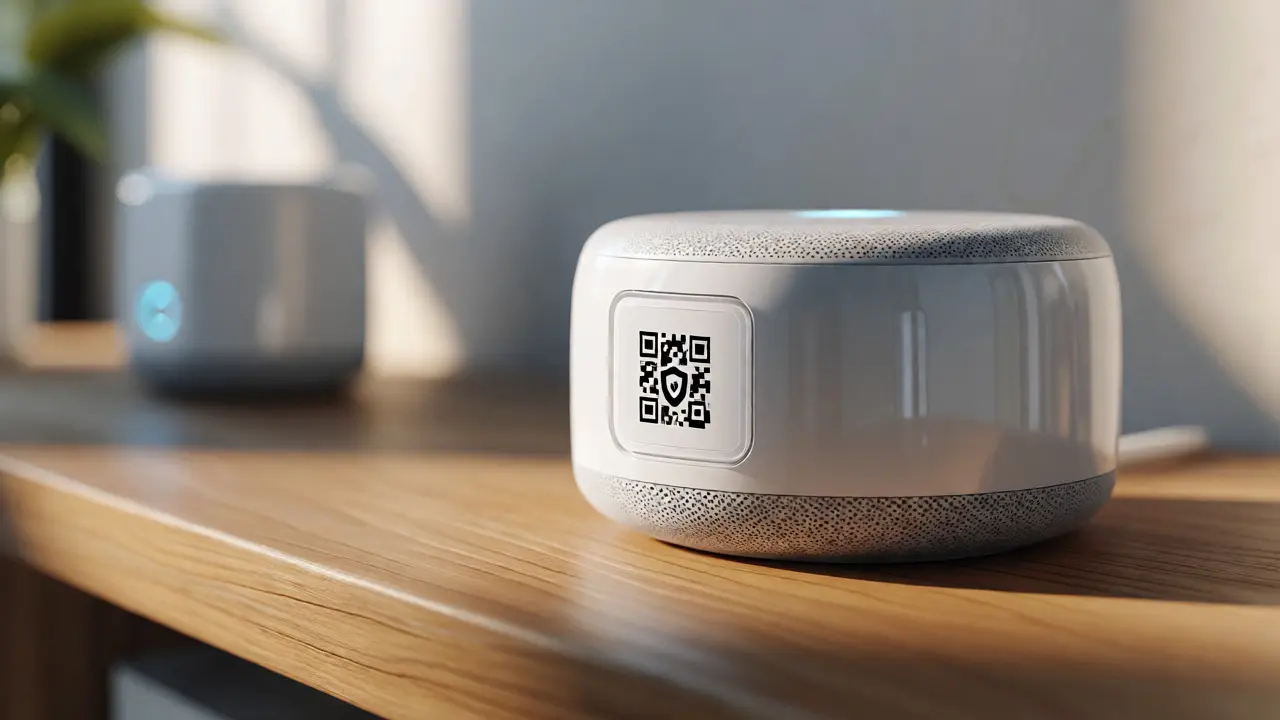
You plug in a new smart thermostat, and it starts sending data to servers you’ve never heard of. Who’s checking if that data is safe? For years, the Internet of Things (IoT) grew faster than the rules meant to tame it. Now, regulators are catching up, and they’re doing it with labels.
If you build, sell, or even just buy smart devices, the cyber regulations and IoT labeling landscape has shifted dramatically by late 2026. It’s no longer about vague best practices. It’s about specific, visible requirements that can make or break your product’s market entry. Ignoring these changes isn’t just risky; it’s expensive.
Why Labels Are Becoming Law
Think about buying food. You don’t guess the ingredients; you read the nutrition label. Regulators want the same transparency for digital safety. The core problem with IoT has always been opacity. A consumer cannot easily tell if a smart camera updates its firmware or if a connected toaster uses default passwords. IoT labeling is a regulatory tool that forces manufacturers to disclose security features in a standardized format.
This shift moves compliance from back-office paperwork to front-of-package reality. In the US, the National Institute of Standards and Technology (NIST) has pushed frameworks like NISTIR 8425, but Europe has gone further. The European Union’s Cyber Resilience Act (CRA), which fully enters into force in 2027, mandates strict conformity assessments. But before that hard law hits, voluntary schemes like the UK’s Product Security Initiative (PSI) have paved the way. These early adopters proved that consumers actually care when given clear information.
The logic is simple: if you make security visible, you create market pressure. Manufacturers compete on security just as they do on battery life or design. This reduces the burden on individual users to be cybersecurity experts.
The Global Patchwork of Rules
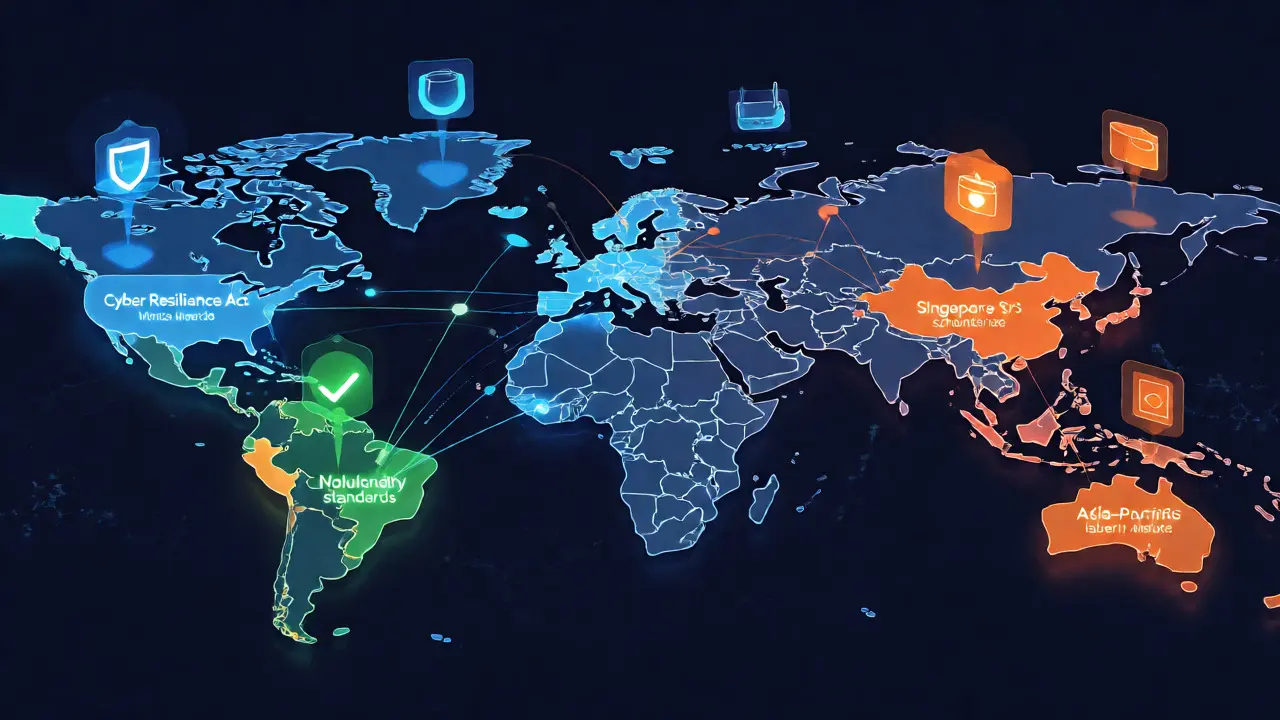
There is no single global rulebook yet. Instead, we have a patchwork of regional regulations that often conflict. Understanding this map is critical for any company selling internationally.
In Europe, the Cyber Resilience Act is the heavyweight. It treats products with digital elements similarly to medical devices or toys. If your device connects to the internet, it falls under CRA scope. Non-compliance fines can reach 15 million euros or 2.5% of global annual turnover. That’s not a slap on the wrist.
Across the Atlantic, the United States takes a more fragmented approach. There is no federal mandate for all IoT devices yet. However, California’s SB-327 was a pioneer, banning default passwords on connected devices. More recently, the White House Executive Order on Improving the Nation’s Cybersecurity encouraged voluntary labeling through the "U.S. Cyber Trust Mark." While voluntary, major retailers like Best Buy and Walmart have signaled they will prioritize labeled products. This creates a de facto requirement for mass-market sellers.
Asia-Pacific regions are also active. Singapore’s Cybersecurity Agency (CSA) launched the Cybersecurity Labeling Scheme (CLS) earlier than most, focusing on consumer routers and cameras. Japan’s Information Technology Promotion Agency (IPA) runs a similar certification. If you sell in Tokyo and Berlin, you need two different labels.
| Region | Framework Name | Status (2026) | Key Requirement |
|---|---|---|---|
| European Union | Cyber Resilience Act (CRA) | Transitional Phase | Mandatory CE marking with security statement |
| United States | U.S. Cyber Trust Mark | Voluntary / Retail Driven | QR code linking to security details |
| United Kingdom | Product Security Initiative (PSI) | Active Voluntary Scheme | Kitemark for secure defaults |
| Singapore | Cybersecurity Labeling Scheme (CLS) | Mandatory for Routers/Cameras | Label indicating security standards met |
What Goes On the Label?
A security label isn’t just a logo. It’s a promise backed by technical specifications. When designing your compliance strategy, you need to know exactly what data points regulators expect to see. Most current schemes converge on three core pillars: identity, lifecycle, and support.
Identity: This refers to unique credentials. No more "admin/admin" passwords. Devices must have unique, non-guessable passwords set at the factory. The label confirms this feature exists.
Lifecycle: How long will the device receive security updates? This is the biggest pain point for consumers. They hate buying a gadget that becomes obsolete or vulnerable after two years. Regulations now require a minimum support period. For example, the UK scheme requires at least five years of software updates for many categories.
Support: Can you contact someone if things go wrong? The label provides a link or QR code to a public vulnerability disclosure policy. This ensures that researchers can report bugs without fear of legal retaliation, a practice known as safe harbor.
Technically, this means your backend infrastructure needs to track update delivery. You can’t just claim you support updates; you need logs proving you sent them. This shifts the burden from marketing claims to engineering reality.
Building a Compliance Roadmap
So, how do you navigate this without drowning in red tape? Start small but think big. Many companies fail because they treat compliance as a last-minute checklist item. It needs to be part of the product development cycle from day one.
- Audit Your Current State: Look at your existing SKUs. Do they use default passwords? Do they stop receiving updates after launch? Document every gap. This audit is your baseline.
- Select Your Target Schemes: Don’t try to certify everything at once. If you sell mostly in the US, aim for the U.S. Cyber Trust Mark. If you target Europe, prepare for the CRA. Align your engineering resources with the strictest relevant standard, usually the EU’s.
- Implement Technical Controls: Enforce unique passwords during manufacturing. Set up an automated system for pushing over-the-air (OTA) updates. Ensure your update server uses strong encryption (TLS 1.3 or higher).
- Prepare Documentation: Create a Software Bill of Materials (SBOM). This is a list of all third-party components in your firmware. If a library like Log4j has a vulnerability, you need to know instantly if your device is affected. An SBOM makes this possible.
- Design the Label: Work with designers to integrate the required icons and QR codes onto packaging and user interfaces. Make it prominent. Hidden compliance doesn’t count.
This process takes time. Expect six to twelve months to move from audit to certified product launch. Rushing leads to failed audits and costly re-engineering.

Pitfalls to Avoid
Even seasoned tech companies stumble here. The most common mistake is assuming "secure enough" is good enough. Regulators look for specific controls, not general vibes. Another trap is ignoring supply chain risks. If your Wi-Fi module comes from a vendor who stops supporting their chipset, your entire product line might become non-compliant. Vet your suppliers’ long-term commitment to security patches.
Also, don’t underestimate the cost of ongoing maintenance. Compliance isn’t a one-time fee. You pay annually for audits and continuously for hosting update servers. Budget for this operational expense, not just the initial certification.
The Future of Connected Device Trust
We are moving toward a world where unlabelled IoT devices are treated like expired milk. Consumers will simply avoid them. By 2030, we’ll likely see mandatory labeling in more jurisdictions, including potential federal laws in the US. The trend is undeniable: security is becoming a primary purchase driver, right alongside price and brand.
For businesses, this is an opportunity. Early adopters of robust labeling schemes gain trust. They differentiate themselves in a crowded market. Waiting until the law forces your hand means scrambling to fix legacy systems while competitors enjoy established reputations.
The compliance landscape is complex, but it rewards preparation. Stay informed, align your engineering with regulatory goals, and communicate clearly with your customers. That’s how you turn regulation from a hurdle into a competitive advantage.
Is IoT labeling mandatory everywhere?
No, not yet globally. It is mandatory in specific regions like Singapore for certain devices and coming soon to the EU via the Cyber Resilience Act. In the US, it is currently voluntary but heavily driven by retailer requirements.
What happens if my device fails a compliance audit?
You typically get a chance to remediate issues within a set timeframe. If you fail to fix them, you may lose the right to use the label, face fines in mandatory jurisdictions, or be barred from selling in key markets.
Do I need to recertify every year?
Most schemes require periodic surveillance audits to ensure you continue to meet standards, especially regarding update delivery. Some certifications are valid for multiple years but require annual reporting of security incidents.
How does an SBOM help with compliance?
A Software Bill of Materials lists all third-party libraries in your device's software. It helps quickly identify vulnerabilities (like Log4j) and proves to auditors that you monitor and manage your software dependencies actively.
Can small startups afford IoT compliance?
Yes, though it requires planning. Using open-source tools for SBOM generation and cloud-based update management platforms can reduce costs. Starting with a limited number of SKUs for certification is a common strategy for smaller firms.